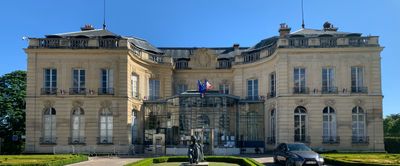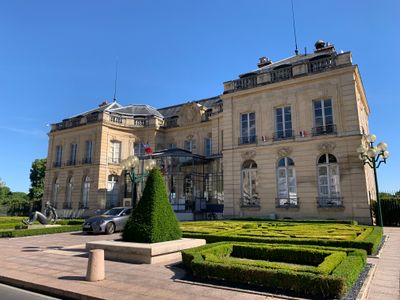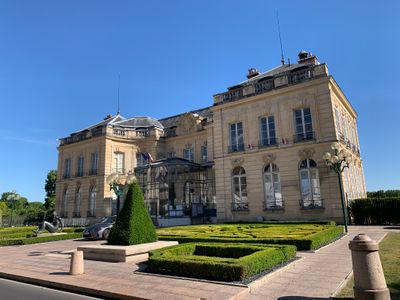
Town hall of Épinay-sur-Seine, town hall in Épinay-sur-Seine, France
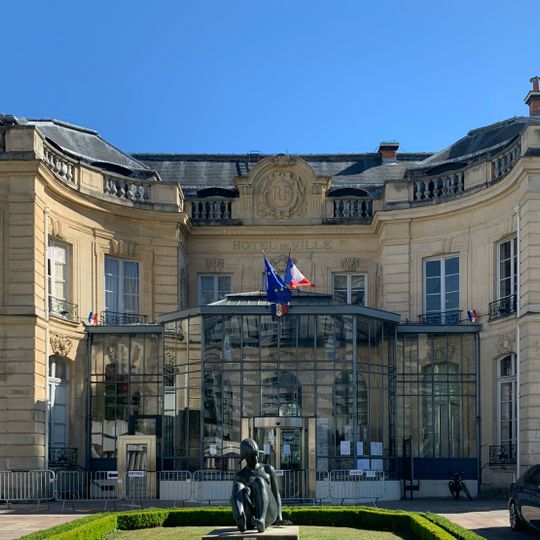
The Town Hall of Épinay-sur-Seine is a two-story structure originally built as a château in the 18th century, designed in a T-shape with classical proportions. Its façade displays stone faces called mascarons and carved trophies representing war, peace, hunting, and music, while the interior features decorated rooms, a grand staircase, and period furnishings.
The estate was built in 1760 by Joseph Durey, son of a wealthy financier, and passed through the hands of European, Tunisian, and English owners over the following century. The town acquired the property in 1906 and opened it as a town hall in 1908, having previously housed a Spanish king in exile.
The building served as a private residence before becoming the seat of local government, and this transformation is visible in how the spaces are used today. Elegant rooms that once hosted private gatherings now host civic ceremonies and community events, reflecting the town's evolution.
The building is located in the town center of Épinay-sur-Seine and is easily accessible on foot or by local transport. It sits within a park offering views of the Seine River, allowing visitors to explore both the historic interior spaces and the green grounds surrounding the site.
The building once housed François d'Assise de Bourbon, a Spanish king in exile, after the monarchy ended in Spain, adding an unexpected royal connection to its history. This unusual chapter links the estate directly to broader European political events of the 19th century.
The community of curious travelers
AroundUs brings together thousands of curated places, local tips, and hidden gems, enriched daily by 91,388 contributors worldwide.