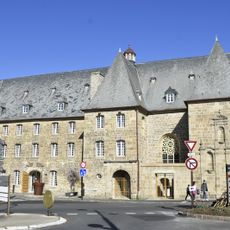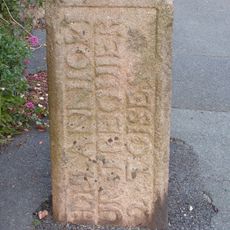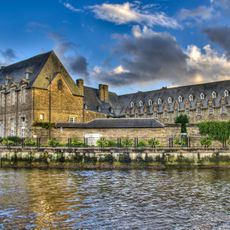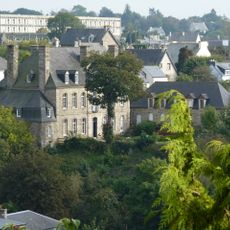
Église de la Trinité de Brélévenez, Medieval church in Lannion, France.
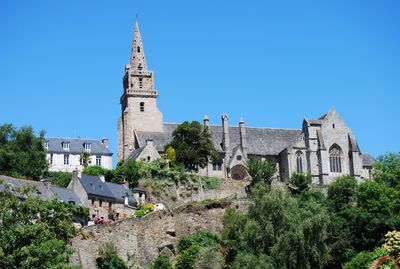
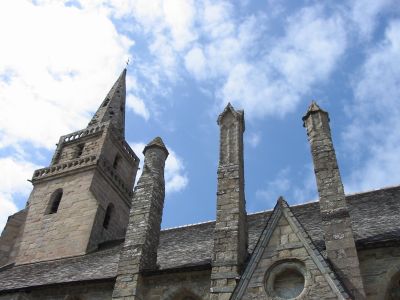
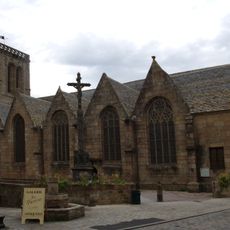
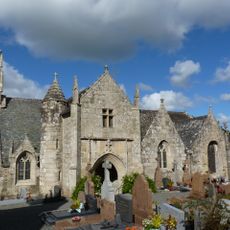
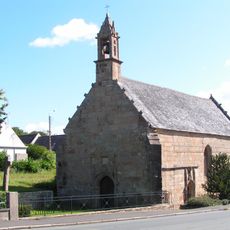
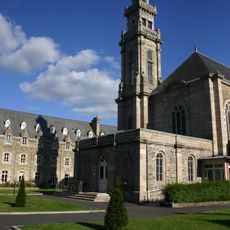
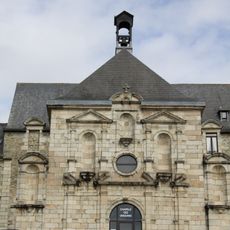
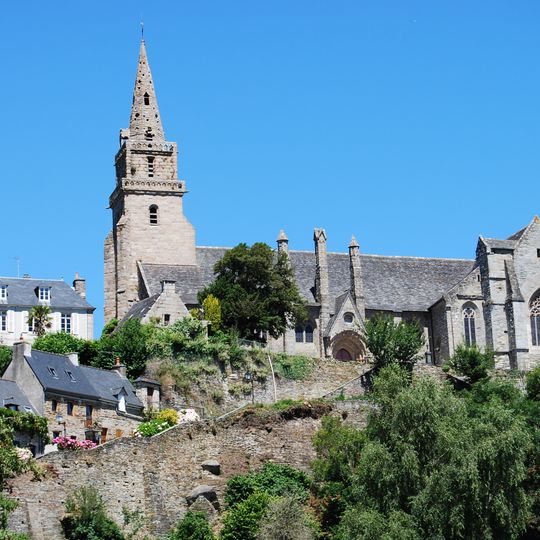
The Église de la Trinité de Brélévenez stands on the Crec'h Tanet hill above Lannion, about 50 m up, reached from the town by a staircase of 140 steps lined with houses. Its Romanesque parts are pink Yaudet granite, while later additions use green schist from a quarry on the hillside. A 15th-century granite bell tower with an openwork octagonal spire rises at the west end; the chevet keeps engaged-column buttresses and carved modillions.
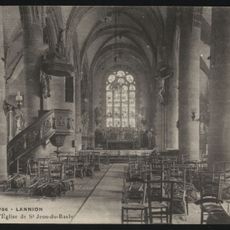
Construction began at the end of the 12th century on 11th-century foundations, starting with the choir and crypt, then the nave; no archives survive, so dating rests on stylistic analysis. The patron is unknown, but it was probably the sanctuary of a monastic house rather than a parish church, perhaps built by the Trinitarians or, by local tradition, the Templars. In the 14th century Olivier V de Clisson fortified it during the War of Breton Succession, and Jean IV obtained its demilitarisation through Philippe le Hardi. The bell tower dates from the 15th century, the choir was remodelled in the 17th, and the church became parochial in the 18th.
The name Brélévenez is explained as "Mont de la Joie" (hill of joy), and local tradition credits the Templars with founding the sanctuary, supported by gravestones carved with a Maltese cross and a sword found on the site. The Trinitarians, or Mathurins, are the other proposed builders. The church kept its own parish until the 18th century, when it replaced the parish church of Rusquet.
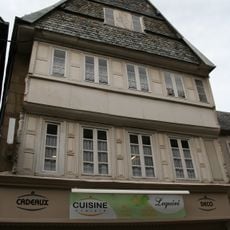
The climb from Lannion's centre follows a staircase of 140 steps, bordered by houses on one side, rebuilt in the mid-19th century after schist quarrying weakened the original. The church stands at about 50 metres on the Crec'h Tanet hill. Since 15 February 2025 the building has been closed by the municipality for safety reasons, so check access before setting out.
The church was fortified in the 14th century by Olivier V de Clisson, Constable of France, during the War of the Breton Succession; Duke John IV had Philippe the Bold of Burgundy intervene to demilitarise it and return it to worship. The low square Tour Plomb, named for its lead roof, served as a watchtower.
The community of curious travelers
AroundUs brings together thousands of curated places, local tips, and hidden gems, enriched daily by 94,097 contributors worldwide.