Laboratoire aérodynamique Eiffel, Aerodynamics laboratory in 16th arrondissement of Paris, France
The Laboratoire Aérodynamique Eiffel is an early 20th century building equipped with wind tunnels and testing facilities designed to study airflow patterns and measure structural wind resistance. The facility demonstrates how researchers could measure and refine designs by observing air movement around different structures.
Founded in 1912 by the renowned engineer Gustave Eiffel, this laboratory grew from his earlier wind resistance experiments conducted at the base of the Eiffel Tower. The facility allowed researchers to systematize their findings and apply discoveries to new industrial and architectural projects.
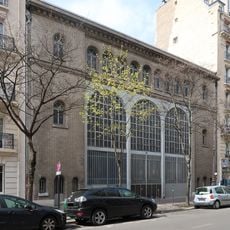
The laboratory's name honours Gustave Eiffel, who built it in 1912. Its wind tunnel, with a 22-metre-diameter air vein reaching 30 m/s, was first used to study aircraft wing profiles. Since 1999 it has been a subsidiary of the Centre scientifique et technique du bâtiment, and it is regularly rented by manufacturers to test scale models.
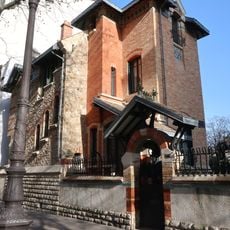
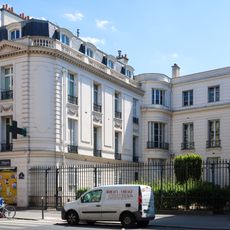
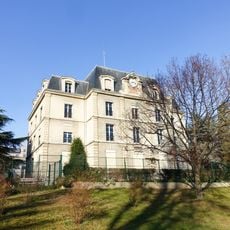
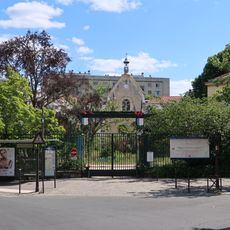
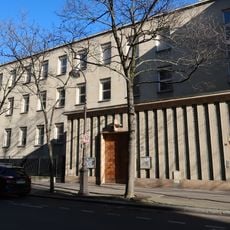
The laboratory is a working research facility, not a site open to casual visitors, so the wind tunnel can only be seen from the street. It stands at 67 rue Boileau, at the corner with rue de Musset in the 16th arrondissement, behind a black metal fence and a hedge. The facade inscription "FONDE EN 1912" and the gable lettering are visible from the pavement.
In its early years, the French automaker Peugeot used this facility to test racing car designs in the wind tunnel. This collaboration shows how quickly technical breakthroughs from this period reached the automotive industry.
The community of curious travelers
AroundUs brings together thousands of curated places, local tips, and hidden gems, enriched daily by 92,894 contributors worldwide.