Oppidum de l'Impernal, oppidum in Luzech, France
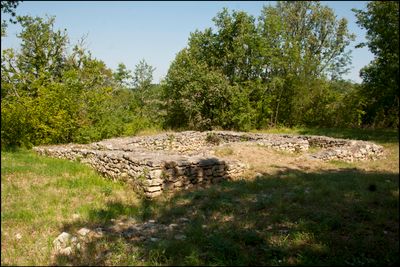
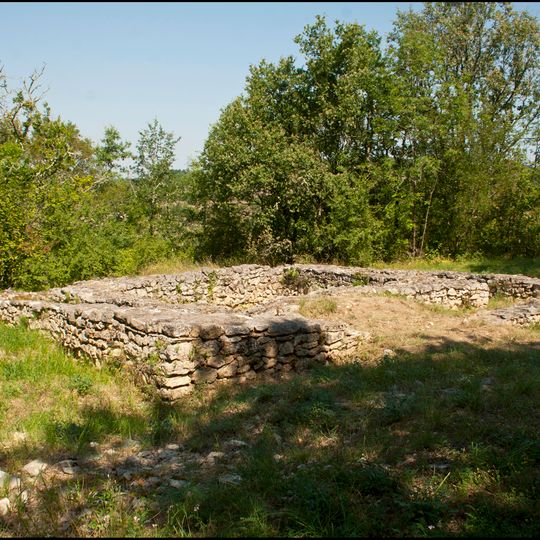
Oppidum de l'Impernal occupies the top of the Pech de l'Impernal, a limestone cliff above the Lot at Luzech. Its elongated plateau, 700 m long and 75 to 200 m wide, rises 150 m above the river. On the grassy summit, low dry-stone walls of light-grey and tan stones outline an angular enclosure, higher and broader in the foreground, fragmentary at the sides, among trees and tall grass.
The oppidum was first settled in the late Iron Age over 2,000 years ago and later expanded during the Gallo-Roman period. Inhabitants gradually built multiple defensive walls and continued occupying the site until the third century CE.
Armand Viré identified in 1922 a square-walled building as a Gallo-Roman fanum, a rural temple in the Gallic tradition, with a cella inside the inner square enclosure and a gallery between the two wall lines; the outer enclosure probably carried wooden columns. It was used until at least the 3rd century CE, then about thirty burials in limestone slab coffins were placed there. Most excavated objects are shown in the Armand-Viré museum in Luzech.
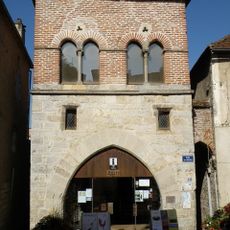
The site sits on the Pech de l'Impernal above Luzech, reached on foot from the village; the ground is uneven grass and the walls are low and unprotected. Finds from the excavations, including a model of the oppidum, are displayed in the Musée Armand-Viré, in a vaulted room of the Maison des Consuls in Luzech.
Armand Viré identified in 1922 a square-walled building as a Gallo-Roman fanum, a rural temple in the Gallic tradition, built in the 1st century BC. Its inner cella stood within a square enclosure, with a gallery between the two wall lines; the outer enclosure probably carried wooden columns. The fanum was used until at least the 3rd century AD, and about thirty burials in limestone slab cists were later placed there.
The community of curious travelers
AroundUs brings together thousands of curated places, local tips, and hidden gems, enriched daily by 94,490 contributors worldwide.