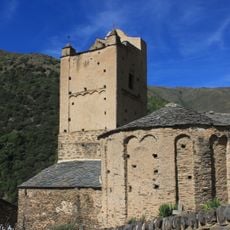
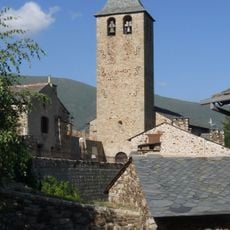
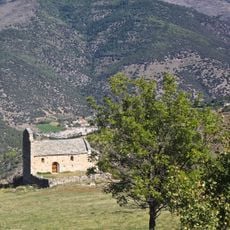
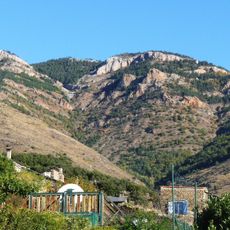
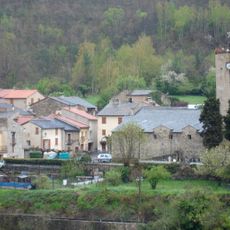
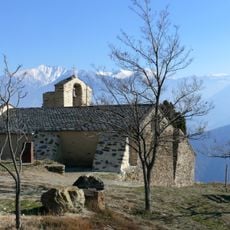
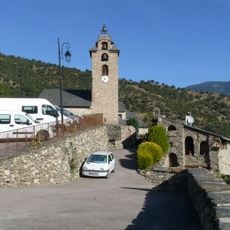
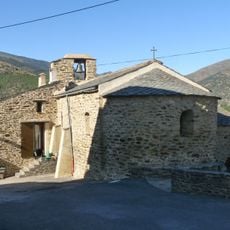
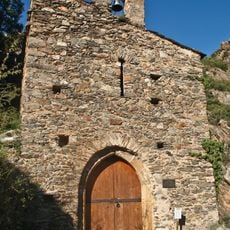
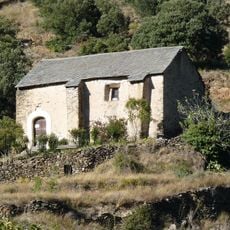
Château d'Évol, Medieval castle in Évol, France.
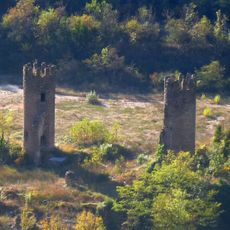
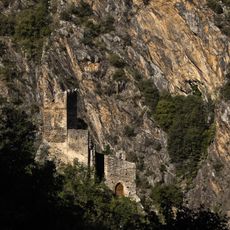
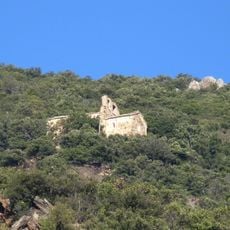
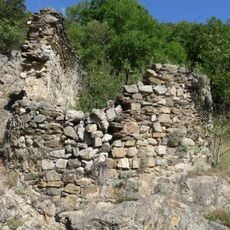
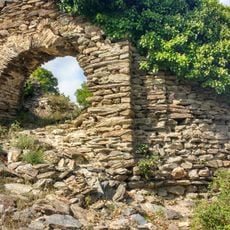
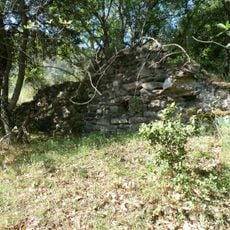
Château d'Évol is a ruined medieval castle on a hillside north of the hamlet of Évol, in the commune of Olette. Its near-square plan (38 by 34.5 m internally) is flanked by four small circular corner towers, with a fifth, larger tower (4.5 m internal diameter, 2.5 m thick walls) at the centre of the north wall. Built of rough squared schist, it preserves its east and west walls, much of the north wall, and a roofless residential building against the west wall.
Évol is first documented in 950 and 957, when it was taken from the viscount of Conflent and given to Santa Maria de Ripoll. The castle itself is first mentioned in 1260, when James I of Aragon restored the lordship to Guillem de So, who began construction. In 1335 James III of Majorca made Évol a viscounty, but around 1340 the viscounts built the new Bastida d'Oleta. In 1385 Bernat IV de So defended the castle against Bernat d'Armanyac.
The viscounts of Évol were almost always counsellors to the king of Aragon and often governors of Roussillon and Cerdanya, and they resided in this castle at least until the 15th century. The title passed by inheritance through the So, Castre-Pinós, Híxar and Aranda families, and is still held by the dukes of Alba.
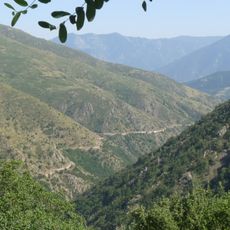
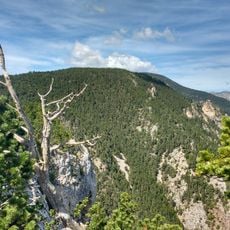
The castle is accessible via a hiking trail that climbs approximately one kilometer uphill from the village of Évol. The walk requires moderate fitness but rewards visitors with views of the surrounding mountain landscape.
The oldest element is a large cylindrical tower at the middle of the north wall, 4.5 m across inside with 2.5 m thick walls, preserved to about 4 m high; its masonry dates to the 11th century, earlier than the rest of the castle. The two small posterns opened only in the western wall, one near the north-west tower and one towards its centre.
The community of curious travelers
AroundUs brings together thousands of curated places, local tips, and hidden gems, enriched daily by 94,022 contributors worldwide.