Saint Gorgon, Gothic church in Varangéville, France
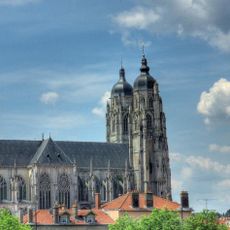
Saint Gorgon is a Gothic church in Varangéville featuring three naves of equal height arranged across eight bays. The structure extends considerable length and concludes with a pentagonal apse at its eastern end.
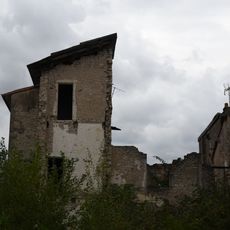
A church dedicated to Saint Gorgon was consecrated by Bishop Odon of Toul on 28 April 1057, during the abbacy of Henri of Gorze. The present building was raised in the first third of the 16th century: the choir vault boss carries the arms of prior Jean de Lorraine with the cardinal's hat he received on 28 January 1518, and the third axial bay is dated 1528. The first bay's thicker piers suggest a tower that was never built, work stopping when Nicolas de Tanaguy replaced Jean de Lorraine as commendatory prior in 1545. The Romanesque tower-porch served as bell tower until the Revolution and now stands within private property.
Varangéville was known as the "mother church" of Saint-Nicolas-de-Port: until 1863 the Port cemetery lay on its territory, and wealthy Port residents had themselves buried inside this church, the poorest in the adjoining cemetery. When space ran out, remains were moved out but the skulls kept and set into the walls, the so-called encastrés. The king's architect had them removed in 1760; a few epitaphs remain on the east wall stones.
The church stands in Varangéville, in Meurthe-et-Moselle, and is a classified monument since 1907. The nave is entered along a central axis, with pews on both sides and a stone path leading to the altar and its reredos. The former Romanesque tower-porch, used as a bell tower until the Revolution, now belongs to a private property and is not part of the visit.
The church walls contain embedded skulls of wealthy deceased from Saint-Nicolas-de-Port following a regional burial tradition. This uncommon practice reflects how social status mattered even in funerary customs.
The community of curious travelers
AroundUs brings together thousands of curated places, local tips, and hidden gems, enriched daily by 93,915 contributors worldwide.