Esquelbecq Castle, Protected monument in Esquelbecq, France
Esquelbecq Castle is a square brick structure from the 17th century in the village of Esquelbecq in northern France, surrounded by a moat and reached by two bridges. Its eight corner towers and a distinct white stone band running along the facade give the building a recognizable appearance.
A first fortification at this site from the 9th century was made of wood and was gradually replaced by a stone structure, first mentioned in documents in 1299. The building visitors see today dates from the early 17th century and replaced the older construction almost entirely.
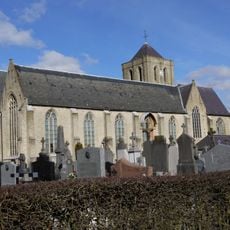
The castle stands on the village's main square, facing a church whose origins go back to the 10th century. Its garden, laid out in the first quarter of the 17th century, follows the compartmented Flemish style of that period. Since 2015 a sculpture, Gieter van Alice by Philippe Thill, has stood in the garden.
The gardens opened to the public in 2016, and in 2018 part of the north wing, with the marble and four-seasons salons, became accessible through an exhibition on the castle's history. The five-hectare landscaped park and the one-hectare compartmented garden can be visited; the castle stands on the village's main square, facing the church.
The hexagonal turret rises 32 metres, taller than the round Gothic towers around the 18 by 20 metre courtyard. In 2015 the sculpture Gieter van Alice by Philippe Thill was placed in the garden. The gatehouse of 1590 keeps a fireplace typical of rural Flanders.
The community of curious travelers
AroundUs brings together thousands of curated places, local tips, and hidden gems, enriched daily by 92,897 contributors worldwide.