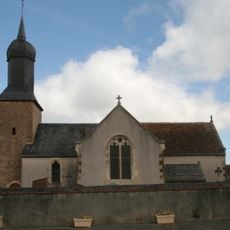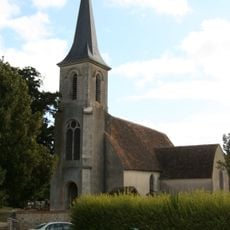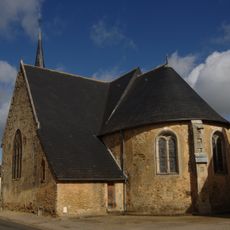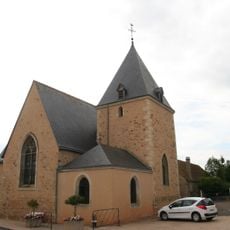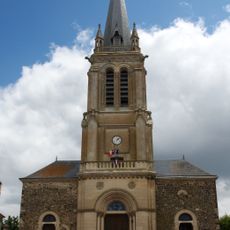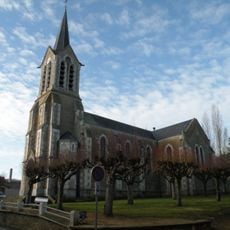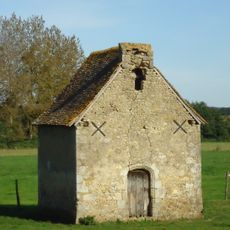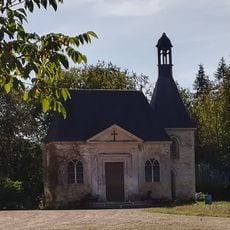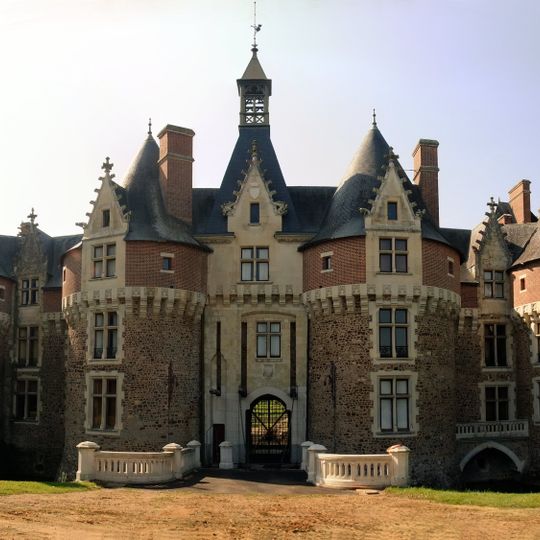
Château de Bonnétable, Renaissance castle in Briosne-lès-Sables and Bonnétable, France.
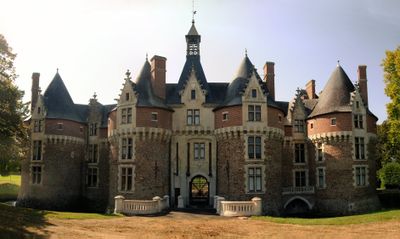
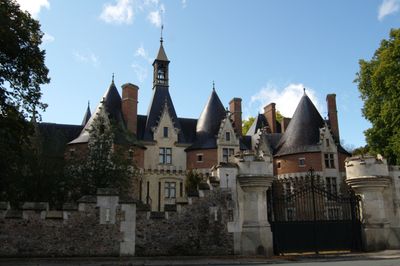
Château de Bonnétable is a Renaissance castle straddling two communes and organized around four towers that frame a quadrangular courtyard. The main building includes a vaulted entrance passage and an adjacent chapel covered with slate roofing.
A fortified castle at Malétable is documented from 1170; occupied by the English in 1420-1422, it was ruined during the Hundred Years' War. In July 1472 Louis XI authorised Jean d'Harcourt to re-establish it, and work began in 1476 under master builder Mathurin Delandelle, continuing after d'Harcourt's death in 1487. Around 1880 Sosthène II de La Rochefoucauld, Duke of Doudeauville, had architect Henri Parent rework the facades in neo-Gothic style.
The 1880s interior decoration, made by artisans and painters from Le Mans, carries symbols of the La Rochefoucauld family history, notably Melusine, called the castle's protector fairy and adopted as the estate's emblem. The dining-room fireplace shows the La Rochefoucauld motto "C'est mon plaisir" and the House of Ligne's "Toujours droit". In 1908 the dining room received Beauvais tapestries, and the chapel eleven medallions of the couple's children's patron saints.
The park and kitchen gardens, entered from rue d'Isly, were relaid in 1885 by landscapers Denis and Eugène Bühler for the Duke of Doudeauville. The estate is crossed by the Tripoulin stream, a tributary of the Orne saosnoise, and bordered by rue du Maréchal Leclerc to the east and the D301 to the west.
The 1476 building contract specified a 110-foot-square structure with a large tower at each corner, two towers flanking a vaulted entrance porch, and a chapel 40 feet long by 24 wide roofed in Angers slate. The walls were to carry stone machicolations. Jean d'Harcourt died in 1487 before the work was finished.
The community of curious travelers
AroundUs brings together thousands of curated places, local tips, and hidden gems, enriched daily by 93,036 contributors worldwide.