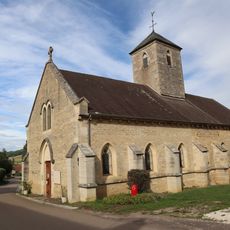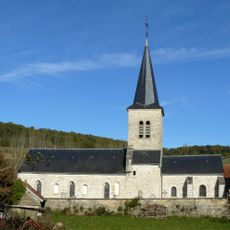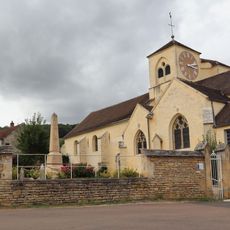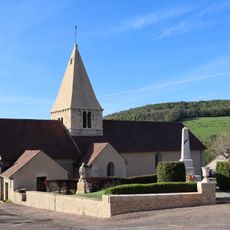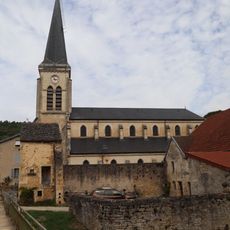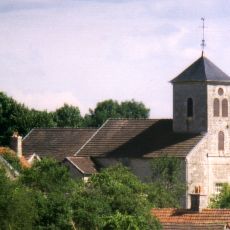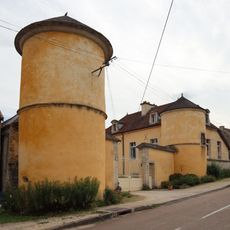
Château de Salmaise, Medieval castle in Salmaise, France.
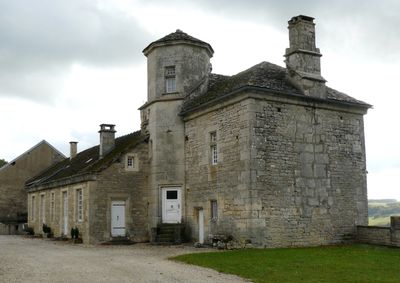
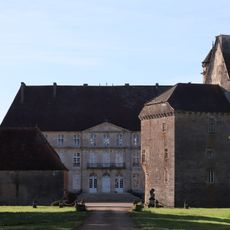
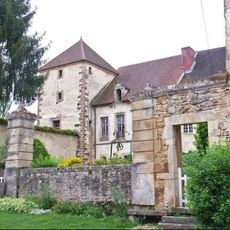
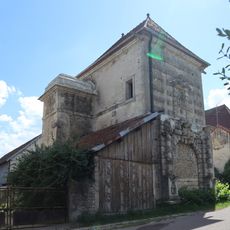
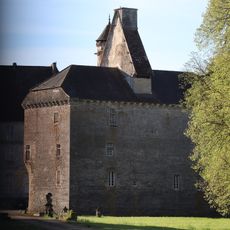
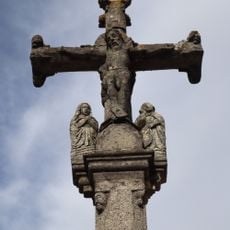
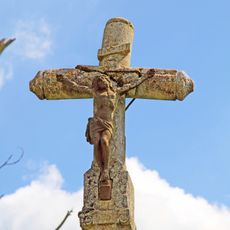
Château de Salmaise stands on a rocky spur in the village centre, protected by two ditches cut into the rock. Its main lodgings occupy the south side, with a rectangular tower, a central building and a barn forming an angle with the eastern ditch. The walls are of light beige limestone, and a stone cross tops the steep roof of small grey stone tiles.
The site's origins are tied to the abbey of Saint-Bénigne: in 1003 Duke Hugues donated his Salmaise holdings to Notre-Dame and Saint-Bénigne, and by 1123 a castle already stood above a mill given to the abbey. On 5 February 1305 the bailiff Hugues du Sauvement demanded its surrender to Duke Robert of Burgundy; it then passed through the Mont-Saint-Jean, Bedey and Frôlois families. Repairs are recorded in 1373 and 1415–1417, but from 1690 it was abandoned and by 1727 reputedly ruined for over a century.
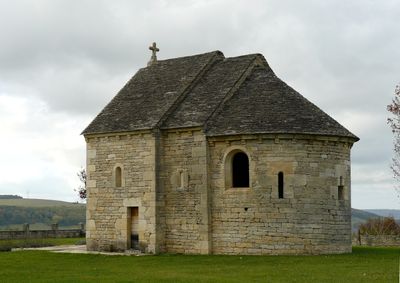
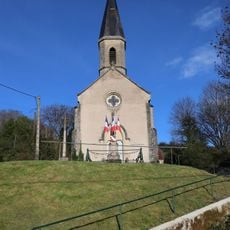
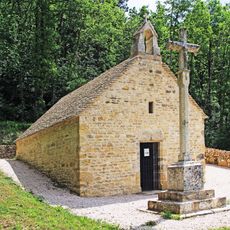
The name Salmaise is tied to the seigneurial family that held the castle from the 11th century, when Humbert I, sire de Salmaise, gave land to the Notre-Dame priory in 1030. The village grew around the castle and its priory, and the castle's Romanesque chapel, dismantled and rebuilt in the courtyard between 1987 and 1993, is now a listed monument.
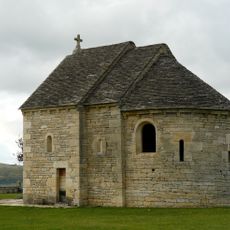
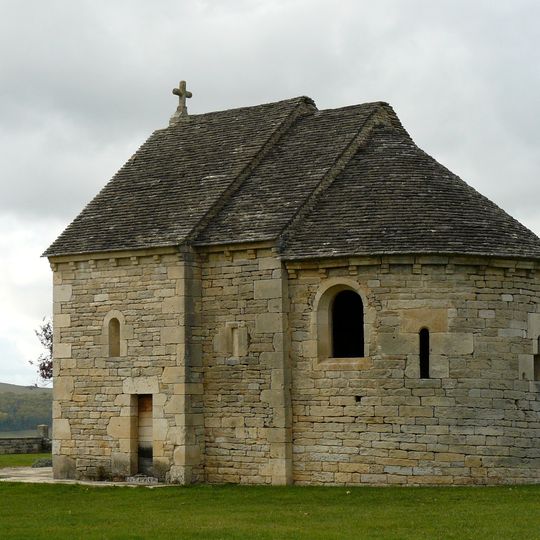
The castle stands in the centre of Salmaise on a spur cut off by two rock-cut ditches; the eastern ditch is now only a slight hollow, and the first ditch in front of the remounted door is being filled in. The buildings are ruined and in private hands, so the remains are seen from the village lanes. Look for the round-arched window and flat-lintelled doorway on the long wall.
The Romanesque chapel now standing in the middle of the courtyard was dismantled and rebuilt between 1987 and 1993; it was listed as a monument historique on 25 September 1928, a month before the rest of the old castle.
The community of curious travelers
AroundUs brings together thousands of curated places, local tips, and hidden gems, enriched daily by 93,848 contributors worldwide.