Phosphatière du Cloup d'Aural, Open-pit phosphate mine in Bach, France
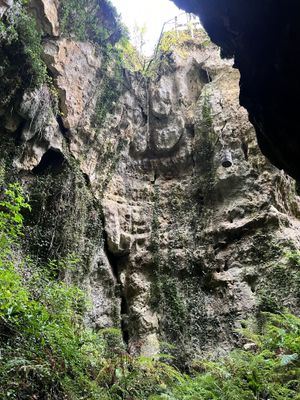
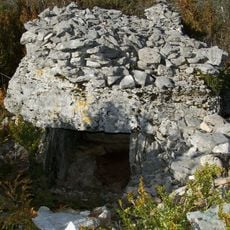
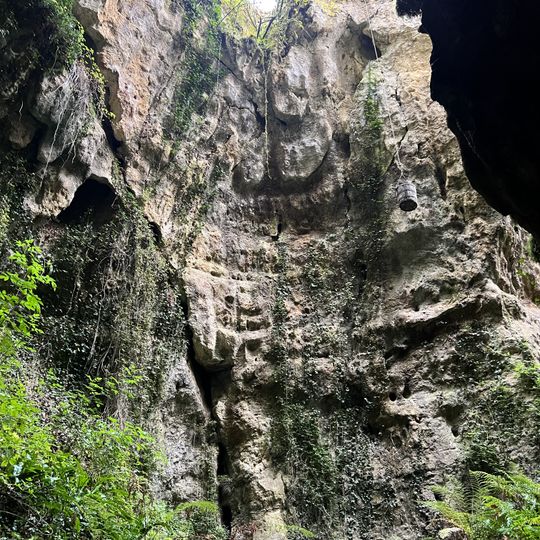
Phosphatière du Cloup d'Aural is a former open-pit phosphate mine in the commune of Bach, in the Lot. Its wall is a tall, irregular face of pale grey and tan limestone, pitted and hollowed into bulbous projections, with ivy and small plants clinging to it and two dark recesses opening into the rock. A metal bucket hangs from a cable on the upper right.
In 1865 Jean-André Poumarède, a pharmacist and chemist from Caussade, noticed unusually green wheat near Caylus and had the bone debris and knobbly stones analysed: 70 to 80% tricalcium phosphate. The Quercy phosphate pits were worked from the 1870s; a Mines Service survey of 1886 counted 161 workings producing 30,000 tonnes. Most closed in 1887, and the Cloup d'Aural was listed as a monument historique on 10 December 1998.
Locals once called the phosphate nodules "crottes du diable" (devil's droppings). Mining here peaked in the 1870s-80s, when 161 Quercy workings produced 30,000 tonnes; by 1902 only two remained. The site opened to visitors in summer 2000, run by the association Les Phosphatières du Quercy.
Visits are conducted through organized guided tours that cover multiple areas of the site. Wear comfortable shoes and prepare for damp conditions typical of this humid environment.
More than 600 animal species have been identified in the Quercy phosphatières, and some of the fossils found there served as the international reference for the standard sequence of European faunas. The Cloup d'Aural is part of the national geological nature reserve of the Lot department, created in June 2015 to stop the pillaging of fossils several million years old.
The community of curious travelers
AroundUs brings together thousands of curated places, local tips, and hidden gems, enriched daily by 92,905 contributors worldwide.