Abbaye de Salival, Premonstratensian abbey in Morville-lès-Vic, France
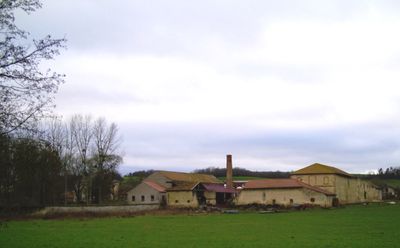
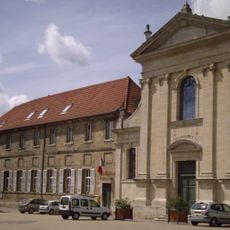
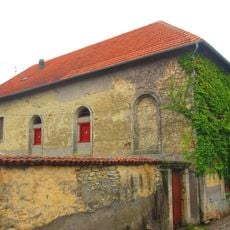
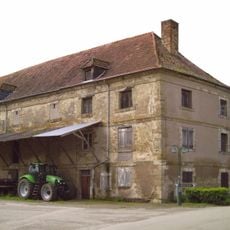
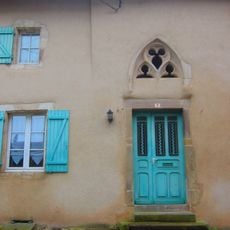
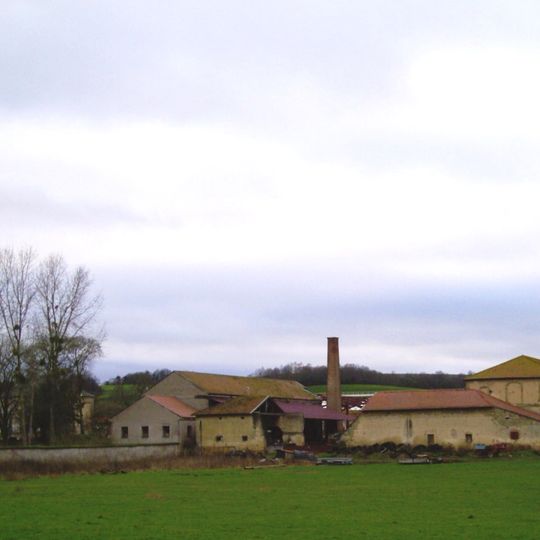
Salival Abbey stands in the hamlet of Salival, part of Morville-lès-Vic, 5.5 km east of Château-Salins. Of the Premonstratensian monastery, only the abbot's lodging remains, now part of a farm: connected stone buildings with pale weathered walls and pitched red-tile roofs, a tall square untapered brick chimney rising above the rooflines, and a low wall in front. The abbey church and cloister were demolished in 1822.
Founded in 1156 by Mathilde de Salm-Hombourg near a chapel dedicated to Saint Fiacre, the abbey received its first canons from Justemont. It grew prosperous through the saltworks of Saléaux and administered the parishes of Tarquimpol, Moncourt and Lagarde. Calvinists from Marsal damaged it in 1590, and a new church was consecrated in 1316. Suppressed in the Revolution, its buildings were sold on 26 July 1796.
The Latin name Salinae Vallis, "valley of salt", refers to the saltworks of Saléaux whose working funded the abbey's early prosperity. The canons also served the parishes of Tarquimpol, Moncourt and Lagarde and the chapel of Saint Livier. The abbey church held the tombs of the counts of Salm; the recumbent figures of Jean VIII and Louise de Stainville were thrown into a field in the Revolution and now stand in the church of Marsal.
The site operates today as a private farm estate and is not open to public visits. The buildings have limited visibility from surrounding roads, so it is best explored as part of a broader tour of the Moyenvic area.
Under the First Empire, sugar was made here from beetroot, and one of the factory's six chimneys still stands beside the buildings. The abbey church and cloister were demolished in 1822 because they threatened to collapse, leaving only the abbot's lodging, now part of a farm owned by the Dieudonné family.
The community of curious travelers
AroundUs brings together thousands of curated places, local tips, and hidden gems, enriched daily by 94,903 contributors worldwide.