Cistercian Abbey of Clavas, abbey located in Haute-Loire, in France
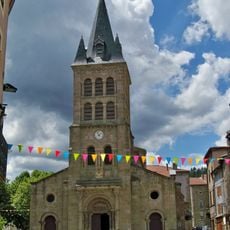
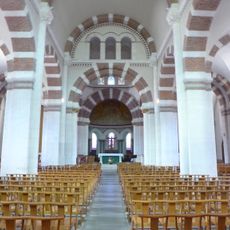
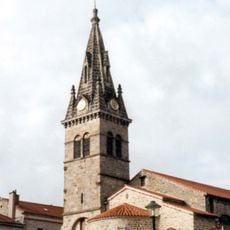
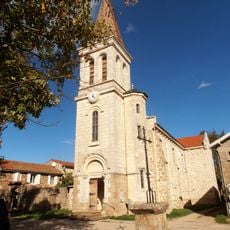
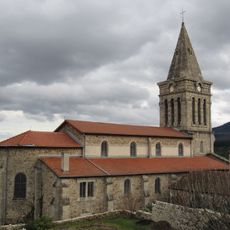
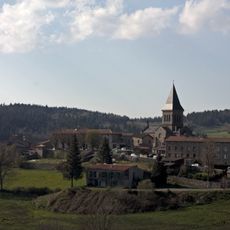
The Cistercian Abbey of Clavas stands in the Clavarine valley at 1,096 m in Riotord, Haute-Loire. Its Gothic abbey church has a single nave with a flat chevet; the rough light stone facade carries a square tower with a tall slate spire and cross, a circular window above an arched window, and a recessed arched entrance. Inside, a rounded arch opens to the sanctuary, where a wooden altar table stands before a dark blue reredos with a central crucifix and painted statue niches.
Founded before 1176 by nuns in a deserted valley east of Riotord, the abbey was placed under the Cistercian abbey of Mazan in 1259. Pillaged and burned during the Wars of Religion, it was restored afterwards. In 1765 the six remaining nuns moved to La Séauve-Bénite; the conventual buildings were largely destroyed at the Revolution, and the surviving parts were inscribed as a monument historique on 24 November 2003.
The name Clavas may derive from clara vallis (clear valley), clausa vallis (closed valley) or Latin clavis (key), since the abbey controlled access to the Col de la Charousse. The nuns were often daughters of local noble families such as the Pagan d'Argental and Clermont-Chaste, who brought their household staff, and the hamlet of Clavas grew up beside the monastery. Today the site is cared for by the association Les Clavari et amis, which has laid out a monastic garden.
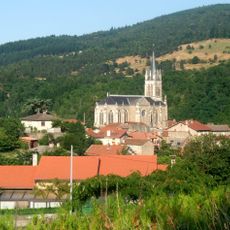
The church is not open as a staffed visitor site; it stands in the hamlet of Clavas, about a kilometre from the sources of the Clavarine at 1,096 m altitude, at the end of the Haute-Loire near the Loire and Ardèche borders. The buildings sit on a peat-bog flat in the stream's flood plain, flooded in autumn 2014, so avoid the site after heavy rain. The former cloister garden, kept until 1956, lay south of the church.
The abbey's name may derive from clavis, Latin for key, because it controlled access to the Col de la Charousse opening onto the Rhône valley. Two crossed keys, the monastery's coat of arms, are still visible in two places in the hamlet. The site is maintained by the association Les Clavari et amis and belongs to the European Charter of Cistercian Abbeys and Sites.
The community of curious travelers
AroundUs brings together thousands of curated places, local tips, and hidden gems, enriched daily by 94,259 contributors worldwide.