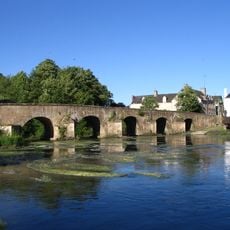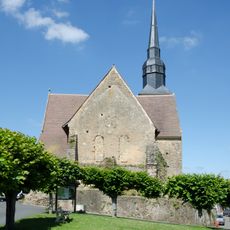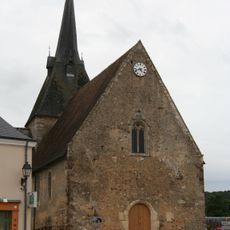
Site archéologique de Duneau, Archaeological site in Duneau, France.
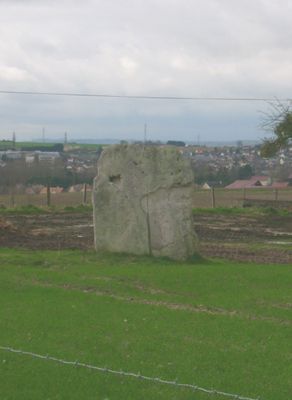
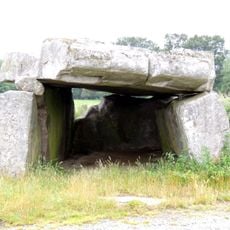
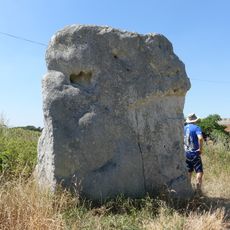
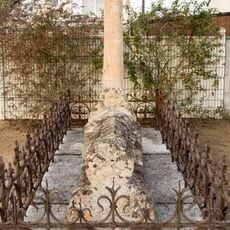
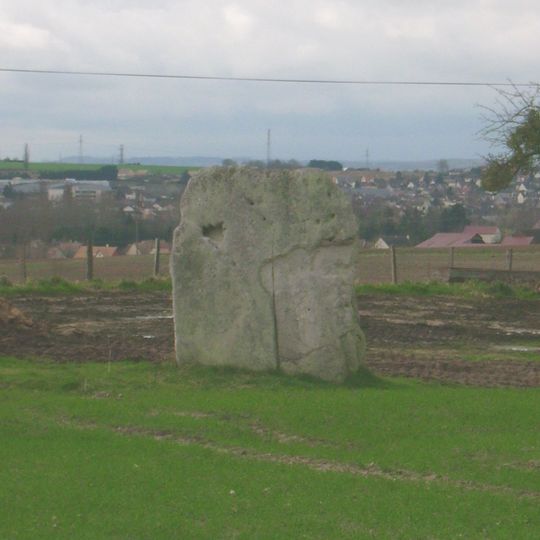
The site archéologique de Duneau lies on the left bank of the Huisne, south-southeast of the village, and includes the megalithic monuments La Pierre Couverte, a dolmen of Angevin type, and La Pierre Fiche, a menhir with a hole through which an axis of lunar declination passes. The photograph shows La Pierre Fiche: a pale grey, upright stone, wider at base and top than in the middle, with a vertical crack down its front face and a small hole-like opening on the upper left side.
The settlement served as a key stopping point on a Roman road that connected Vindunum to Autricum, functioning as a center for trade and movement. Excavations in 1993 revealed that people occupied and worked here across several centuries.
The site displays evidence of pottery workshops and an ancient water system that served the settlement. These remains show how inhabitants organized their daily crafts and managed resources in this Gallo-Roman community.
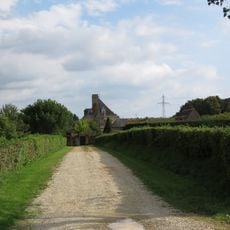
The site lies south to south-east of Duneau's outskirts and western margins, bordered by the Huisne to the west, the Dué to the south-west and the Quellerie stream near the Luard hamlet. The excavated area is reached from the village; the megalith La Pierre Fiche stands in a field, with bare ground behind it.
A notable discovery was a cache of small bronze coins from the 3rd century that hints at prosperity and trade in this area. The quantity and location of the find suggest this place once served as an important economic hub.
The community of curious travelers
AroundUs brings together thousands of curated places, local tips, and hidden gems, enriched daily by 94,403 contributors worldwide.