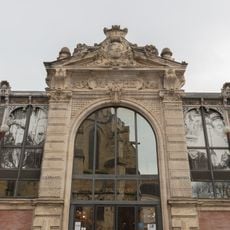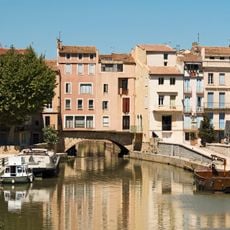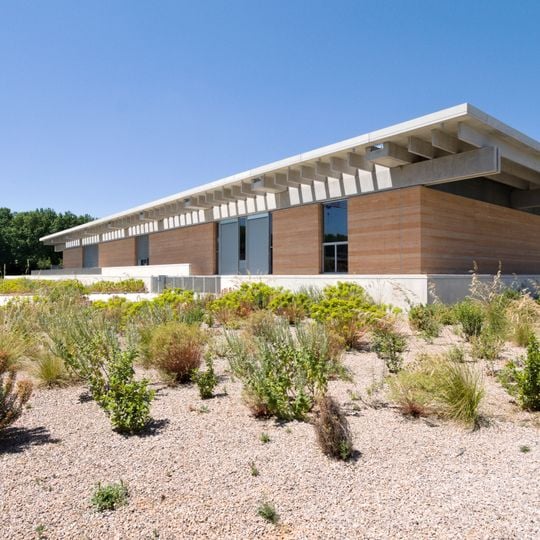
Narbo Via, Archaeological museum in Narbonne, France
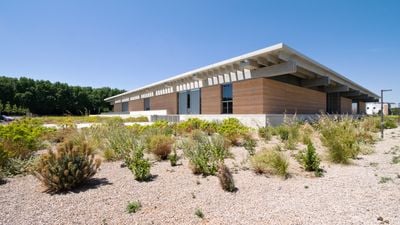
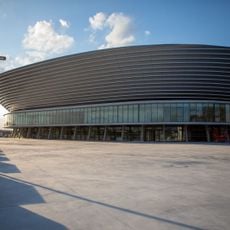
Narbo Via is a museum in eastern Narbonne, near the Canal de la Robine. Its 97-metre-long building, designed by Foster + Partners, has a flat roof with a deep overhanging eave supported by rectangular concrete beams. The upper facade is clad in horizontal bands of light brown stone, with large glass panels and dark metal frames. Inside, a 76-metre-long, 10-metre-high metal rack wall displays 760 Roman stone blocks.
Narbonne became Rome's first major settlement beyond Italy when established as a colony and developed into a crucial Mediterranean trade port. The collections document how this city evolved from its founding through centuries of commercial and political change.
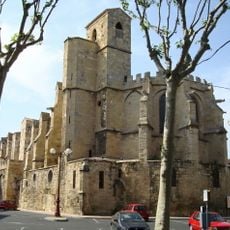
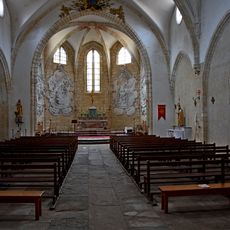
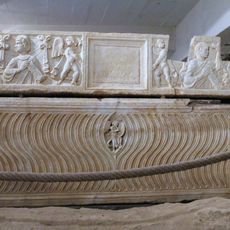
The museum's name joins Narbo, the Roman name of Narbonne, with the Via Domitia, the road built from 118 BC by Cnaeus Domitius Ahenobarbus. A milestone bearing his name, found 20,000 Roman paces south of the city, greets visitors at the start of the permanent route. The lapidary wall holds 760 carved blocks, most from funerary monuments, reused in the city wall on the orders of Francis I before being gathered in the former church of Notre-Dame de Lamourguier.
The entrance is at the rear of the north-west side; from there a sightline runs straight through the building to the Mur lapidaire at the far end. The cafeteria with its glass front onto the terrace and the shop lie to the right of this axis, the ticket area to the left. The permanent collection occupies the north-east half, visited as a circuit.
The 76-metre Mur lapidaire is a metal high-bay rack holding 760 carved Roman stone blocks, moved by an automated stacker crane. Most blocks were set into Narbonne's city gates by order of Francis I in the Renaissance, then stored in the former church Notre-Dame de Lamourguier after the walls were demolished between 1868 and 1884.
The community of curious travelers
AroundUs brings together thousands of curated places, local tips, and hidden gems, enriched daily by 93,127 contributors worldwide.