Forêt de Hesse, Natural forest area in Lorraine, France
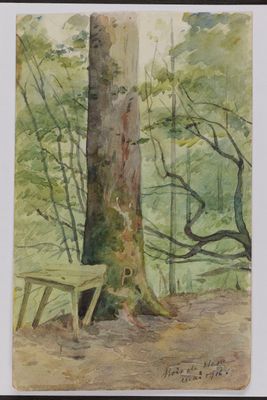
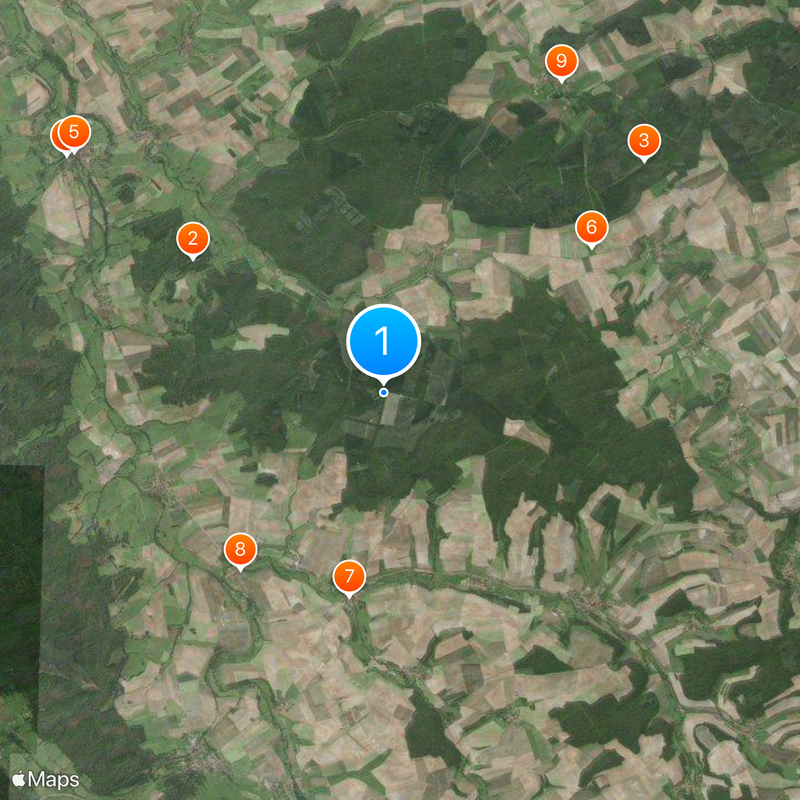
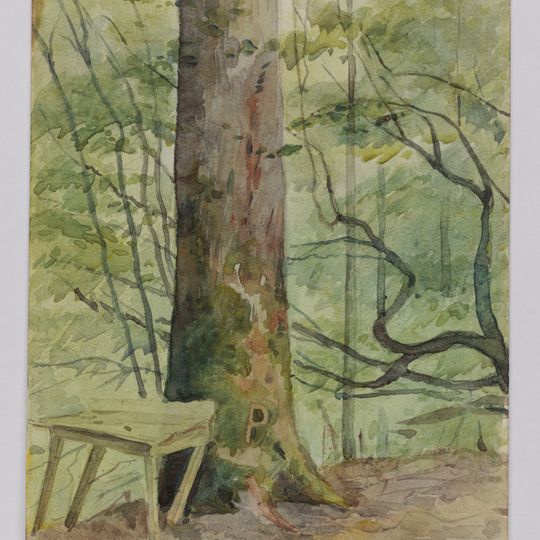
The Forêt de Hesse is a beech wood spread across eleven communes west of Verdun, from the Buante valley to the Aire valley, centred near the Ferme de Verrières-en-Hesse at about 250 m. Its name refers to a beech grove or a place fenced with beech wood. The photograph shows a moss-patched trunk with a crude pale wooden bench at its base.
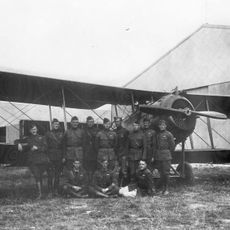
The forest's Gallo-Belgic pottery workshops of the 1st century AD, excavated from 1905 onward, preceded its wartime role. In 1918 Camp Devin, north of the Ferme de Bertramé, housed the US 91st Division from 23 September, and the US V Corps moved to the nearby Verrières-en-Hesse farm on 30 September. A 600 mm Decauville field railway ran from Aubréville station to the forest, carrying supplies and wounded; from Le Marcassin station horses hauled the trains into the front zone.
The name Hesse comes from beech: old dictionaries gloss it as a place where the beech grows or one enclosed by a beechwood fence. In the Belle Époque, between 1905 and 1914, traces of sigillata production were found at the Rendez-vous de Chasse, a former hunting meeting point at the forest entrance.
The forest lies within Verdun's Red Zone, a contaminated area from World War I that visitors can enter. It is important to stay on marked paths and follow safety guidelines to avoid contact with hazardous materials.
The military railway station in the forest, Le Marcassin, was named after a young wild boar (marcassin in French) that soldiers found there, tamed and raised on milk. Trains were pulled by horses from this station into the dangerous zone near the front.
The community of curious travelers
AroundUs brings together thousands of curated places, local tips, and hidden gems, enriched daily by 94,368 contributors worldwide.