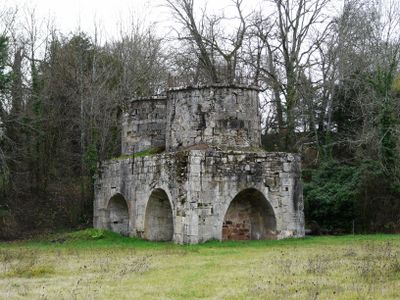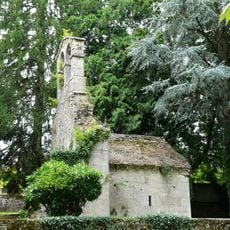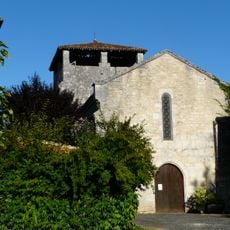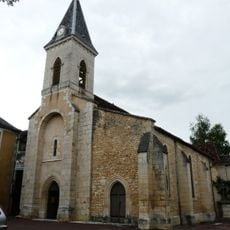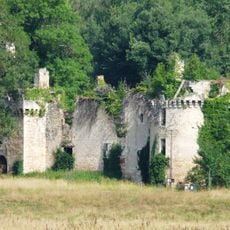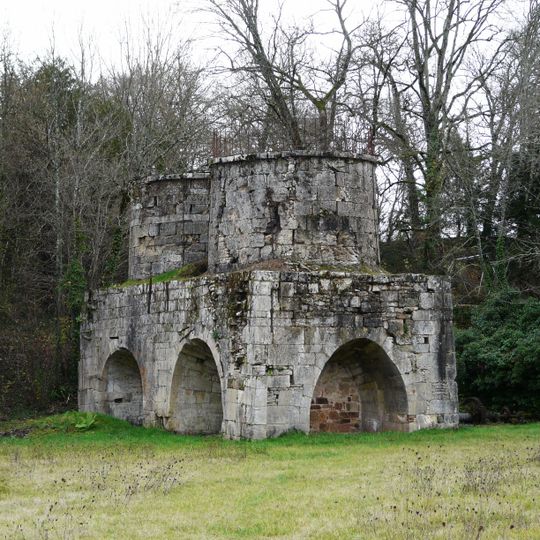
Forge d'Ans, Historical smithy in Cubjac-Auvézère-Val d'Ans, France.
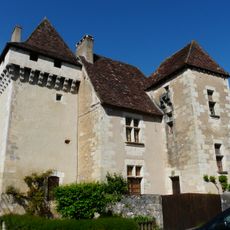
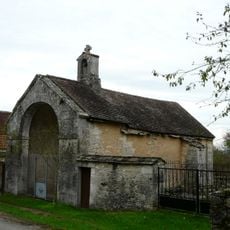
Forge d'Ans is a former metalworking site with multiple workshop buildings, blast furnaces, rolling mills, and a master's residence on the grounds. Some buildings connect through underground passages that include vaulted rooms and a historical kitchen with period features.
Cannons for the Marine royale were cast at Forge d'Ans from 1691 to 1830, then hauled 34 km overland to the port of Moustier on the Vézère for river and sea shipment to the Rochefort arsenals. The Bertin family brought prosperity before decline; on 2 December 1791 the marquise de Taillefer sold the run-down works to farmer Jean Festugière. War from 1793 revived production, and workers struck in 1794 for higher pay. Free-trade agreements with England in 1860 hit the forge, which closed in 1870.
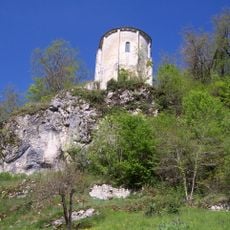
The forge's name comes from the Pays d'Ans, and the site sits beside the ruins of the old château d'Ans. Its water power came from the Blâme, dammed just before its confluence with the Auvézère. The Festugière family made its name here in iron and finance; the philosopher André-Jean Festugière descended from Jean Festugière, who bought the works in 1791.
The site is not open to visitors: the forge domain is private property, enclosed by a stone wall to the north, south and west, with a gate on the south side. The surviving elements can be seen from the surrounding lanes near the Blâme, just before its confluence with the Auvézère. The grounds are uneven and partly overgrown.
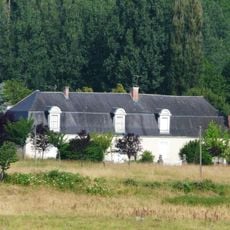
The master's house, built by Jean Festugière between 1791 and 1810, has two basement levels: the lower one holds vaulted rooms and a tunnel descending to the forge level, while the upper one keeps an old kitchen with a fireplace, a roasting spit, a bread oven and a vegetable store. An outside staircase links house and forge.
The community of curious travelers
AroundUs brings together thousands of curated places, local tips, and hidden gems, enriched daily by 93,170 contributors worldwide.