Lac de Grand-Lieu, Protected lake in Loire-Atlantique, France
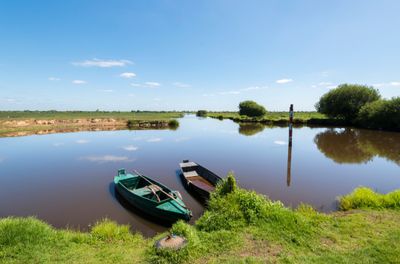
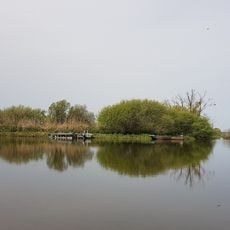
Lac de Grand-Lieu is a large freshwater lake in Loire-Atlantique featuring extensive reed beds, wetlands, and shallow water zones that shift markedly across seasons. The water supports diverse plant life and provides habitat for many fish species and amphibian organisms within this protected natural site.
Around 851, under Breton rule, the lake passed to royal then ducal guardianship. In 1145 Conan III granted his rights to the monks of Buzay Abbey, who held them for about 150 years, including fishing rights, before conceding them to the lord of Vieillevigne for an annual rent of seven livres. The rent ceased in 1387, and the Machecoul-Gastineau family then took possession of the rights and expropriated the property title.
Locals call the lake simply "Grand-Lieu", since "lac de Grand-Lieu" would repeat the meaning of lieu, traced by Michel Kervarec to a Gaulish word for lake. The name appears in French as lac de Grand Leu in the 13th century. Around the lake, wet meadows are crossed by canals called douves, kept open by farming and grazing.
Navigation is banned except for seven licensed professional fishermen, so visitors stay on shore. The lake can be reached at Bouaye in the north, Pierre Aigüe in Saint-Aignan-Grandlieu and La Chevrolière in the east, outside winter floods. A museum on the lake and its fishermen, an observatory, the Maison du Lac at Bouaye and the old Guerlain pavilion overlooking the water serve visitors.
The water surface fluctuates dramatically between seasons, shrinking to roughly 3,500 hectares in summer while expanding to over 6,000 hectares in winter. These extreme shifts make each visit a different experience and reshape the landscape, wildlife patterns, and available activities.
The community of curious travelers
AroundUs brings together thousands of curated places, local tips, and hidden gems, enriched daily by 92,654 contributors worldwide.