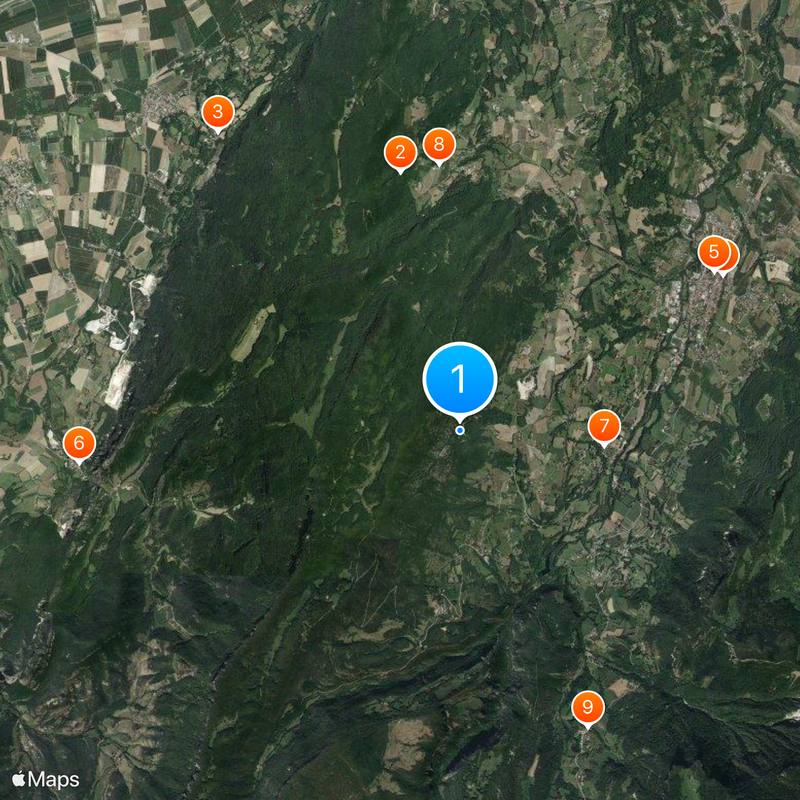
Dauphiné, Historical province in southeastern France
The Dauphiné is a historic territory in southeastern France that covers the present-day departments of Isère, Drôme, and Hautes-Alpes. The landscape ranges from Alpine summits and gentle hills to river valleys stretching between the Rhône and the Italian frontier.
Count Guigues IV of Albon gave the territory its name in the 12th century after adopting a dolphin as his heraldic symbol. The transfer to the French crown in 1349 led to the heir apparent being titled Dauphin until the monarchy fell.
The regional Parliament of Dauphiné, established in 1453, shaped local governance and judicial practices until the French Revolution transformed the administrative structure.
The former territory now includes several ski resorts, hiking routes, and farming areas producing wine, cheese, and the traditional potato dish gratin dauphinois. Visitors encounter both high mountain passes and valleys with milder climates.
The Parliament of Dauphiné, founded in 1453, held its own judicial powers until the French Revolution. This self-governance shaped regional identity and legal style for centuries.
The community of curious travelers
AroundUs brings together thousands of curated places, local tips, and hidden gems, enriched daily by 92,740 contributors worldwide.