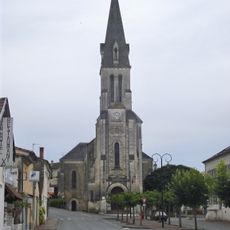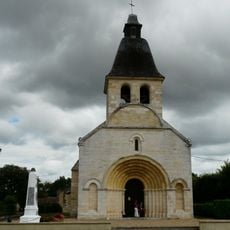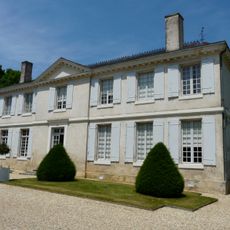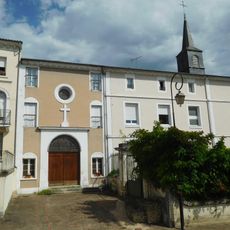
Gabillou cave, Prehistoric art cave in Sourzac, France.
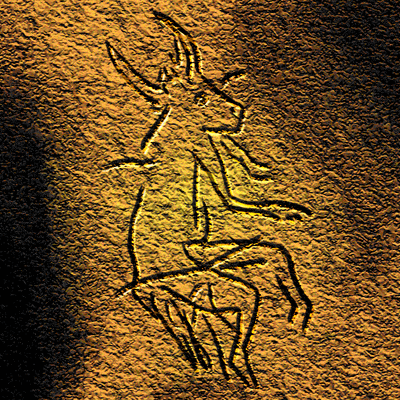
Grotte de Gabillou, also called Grotte de las Agnelas, is a 27-metre cave in Sourzac, Dordogne, cut into sandy Maastrichtian limestone. Its passages are only 50 to 60 cm wide and lead to a small chamber, the Salle du Cheval Rouge. The walls and parts of the vault bear more than 200 engravings, including horses, bison, reindeer, ibex, birds and the horned figure known as the Sorcerer.
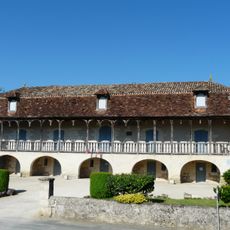
Discovered in 1941 by Charmarty and Truffier in the basement of a house, the cave was reported that same year to the Société historique et archéologique du Périgord and classified as a historic monument on 20 July 1942. Jean Gaussen bought the property in August 1955 and published a limited edition of 500 copies on its engravings in 1964. The art is attributed to the Magdalenian by David et al. (1952), while Peyrony (1941) proposed Périgordien or Aurignacien.
The cave's name "las Agnelas" comes from the Occitan for lambs, though the engravings show no sheep. The figures are dominated by 56 horses, along with 21 reindeer, 18 birds, 12 bison and 8 ibex, mostly drawn whole and in proportion, some standing and some seated.
Access is not open to the general public since the cave is privately owned and strictly protected. Visiting requires prior arrangement and permission from the property owners.
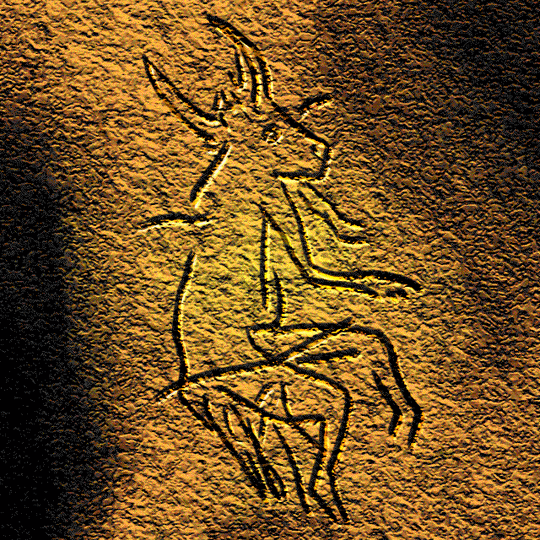
Among the engravings is a figure called "The Sorcerer", a horned, bearded man-like shape with a human-looking foot and leg. The cave also yielded nine Magdalenian stone lamps, one of them only partly freed from its limestone block.
The community of curious travelers
AroundUs brings together thousands of curated places, local tips, and hidden gems, enriched daily by 93,359 contributors worldwide.