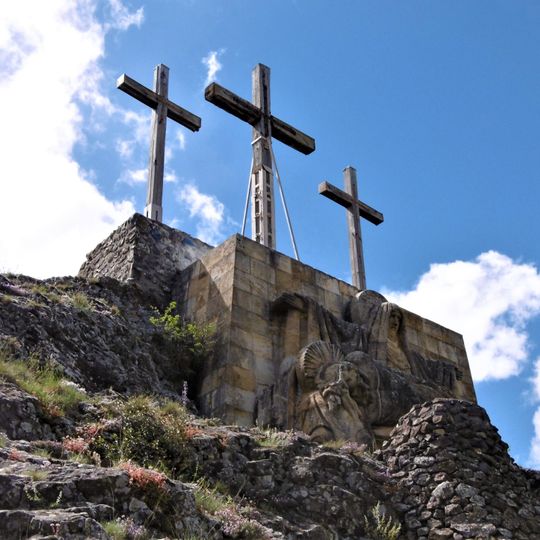
Calvaire du Montoulon, Catholic calvary on Montoulon hill, Privas, France
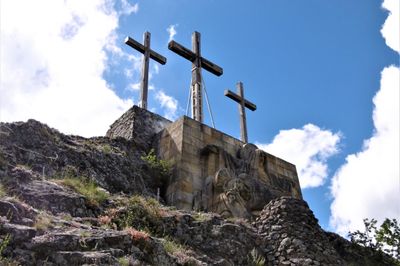
The Calvaire du Montoulon stands on a basalt hilltop at 427 metres above Privas. Three plain dark wooden crosses, without figures, are mounted on a stepped masonry platform; below the central cross, a light stone wall carries a deep relief of hooded figures and a veiled face with clasped hands. The monumental pietà by Carlo Sarrabezolles, added in 1955, sits beneath the crosses.
The volcanic hill served as a lookout to defend Privas against invasions. In 1629, Swiss guards of King Louis XIII fought the last Privas Huguenots entrenched there. On 5 August 1840, Father Joseph-Marie Chiron bought the site and, without real means, launched construction of the three crosses, relying on donations from citizens and benefactors.
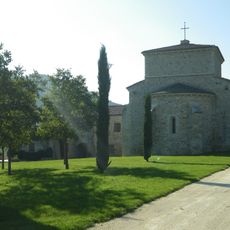
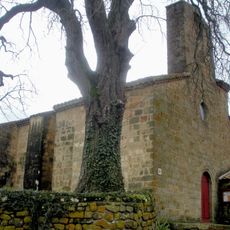
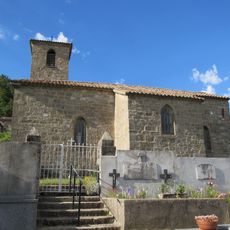
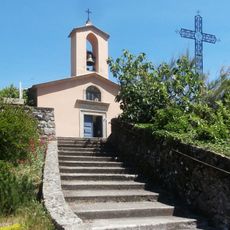
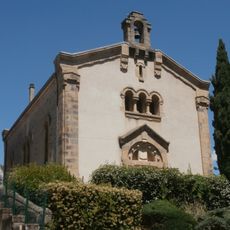
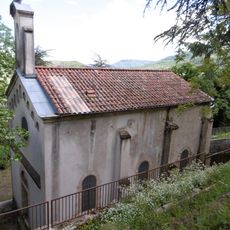
The name Montoulon, used on the trail signs, is preferred by the city over the Mont-Toulon spelling found on Michelin maps. The site belongs to the Sainte-Marie de l'Assomption congregation, and the chapel halfway up is not open for worship. The crosses are lit at night, so they remain visible above Privas after dark.
The shortest marked trails start at Boulevard de Montoulon; allow about an hour for the round trip from the town centre. The path climbs steeply and is not recommended for people with reduced mobility without assistance. The site is served by line C of the Privas public transport network.
The summit's basalt is a volcanic neck about 100 metres across, set into Jurassic sedimentary rock and cut by a north-northeast to south-southwest fault. Erosion wore away the softer marls and limestone around it, leaving the harder basalt standing as the hill above Privas.
The community of curious travelers
AroundUs brings together thousands of curated places, local tips, and hidden gems, enriched daily by 94,428 contributors worldwide.