
Pitareti Monastery, Medieval monastery in Tetri Tsqaro Municipality, Georgia.
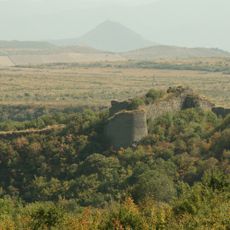
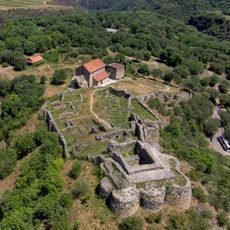
Pitareti Monastery stands in the Khrami river valley, 12 km southwest of Tetritskaro. Its walled complex centres on the Church of the Nativity of the Theotokos, a 15 by 13 metre domed cross-in-square building 23 metres high, with a three-storey bell tower set into the wall, a 1696 wine cellar (marani), and ruined outbuildings on the lower terrace.
Built in 1213–1222 under King Lasha-George, the monastery was partly destroyed during the Khwarezmian and Mongol invasions and restored in the first half of the 14th century by Kavtar Kachibadze, amirejibi of George the Brilliant and ancestor of the Baratashvili. In 1671 Qaplan Orbelishvili refurnished it, adding a bell tower, walls and a wine cellar dated 1696. After a Lezgin attack in 1750 it closed in 1752.
The main church displays intricate stone carvings and preserved frescoes from the 13th century, representing medieval Georgian artistic traditions. The walls record through their decorations the artistic skills and religious beliefs of the monks who lived here.
The monastery stands in the Khrami river gorge, 12 km southwest of Tetritskaro and 100 km from Tbilisi, near the deserted village of Pitareti. It was closed in 1752 after a Dagestani attack and only revived in 2007. The single entrance is through the southern portico; the site includes ruined buildings on the lower terrace north of the cathedral.
The marani north of the church, on the lower terrace, carries an inscription naming Abbot Iov as its builder in 1696. It served not only for wine but also as living quarters and a defensive structure. The monastery kept a rich library; a 1673 Gospel commissioned by Aslan Orbelishvili and Tamar Diasamidze survives from it.
The community of curious travelers
AroundUs brings together thousands of curated places, local tips, and hidden gems, enriched daily by 94,046 contributors worldwide.






![Ქვეშის ციხე და ქვეშის ციხის ეკლესია]]](https://img6.digsty.com/LiHMGF_JGvagP4bJsLGecXquMELd06sdjt59Wi3Ib38/rs:fill:230:230:1/g:fp:0.5:0.5/czM6Ly9hcm91bmR1cy8xNC83NjM1NjQ2LWFmZjVjMmYxLmpwZw.jpg)
