Fortress of Bagrati, Medieval fortress near Black Sea in Sukhumi, Georgia
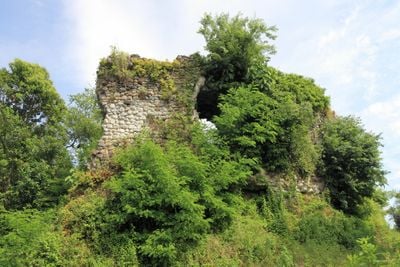
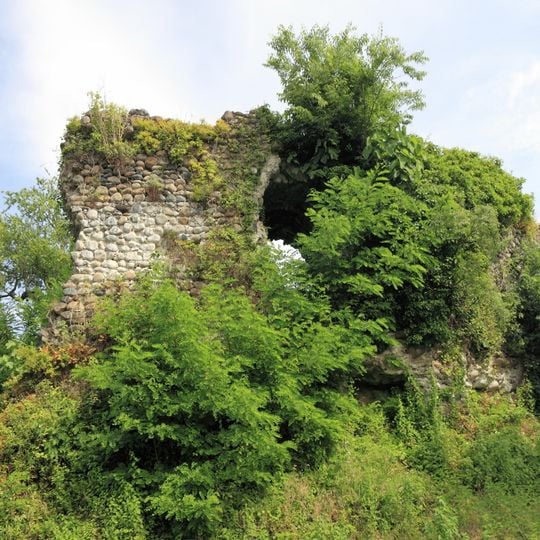
The Fortress of Bagrati is a medieval castle on Georgia's Black Sea coast built with stone walls in an oval shape and featuring a rectangular entrance tower. The structure includes remains of multiple interior spaces and passageways, with gates and tunnels still visible within the main walls.
The castle is named after the Georgian king Bagrat III or Bagrat IV and is traditionally dated to the late 10th or 11th century, based on a 19th-century local legend. Architectural evidence suggests a later date, possibly serving as the seat of the eristavi of Tskhumi. It was abandoned in the 16th century when the main settlement moved to the right bank of the river.
The castle's name comes from a 19th-century local legend attributing it to King Bagrat III or Bagrat IV, though architectural evidence suggests a later date. In the Middle Ages it was the seat of the eristavi of Tskhumi and a refuge for the Shervashidze family. Queen Tamar may have stayed here in the early 13th century.
The ruins stand on a hill on the left bank of the Basla (Besleti) river, in south-eastern Sukhumi, about 500 m from the sea. The surviving walls reach 10–12 m and the ground between them is uneven, so wear sturdy shoes. Georgia listed the site as in urgent need of conservation in 2015, so keep to the paths and do not climb the masonry.
The castle's name and 10th–11th century dating rest on a local legend first recorded in the 19th century; architectural evidence points to a later construction, possibly the seat of the eristavi of Tskhumi. In the 1950s Mikhail Trapsh's excavations found wine jars, glazed pottery and other items from the 12th to 14th centuries.
The community of curious travelers
AroundUs brings together thousands of curated places, local tips, and hidden gems, enriched daily by 93,468 contributors worldwide.