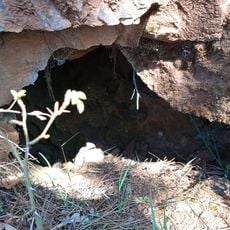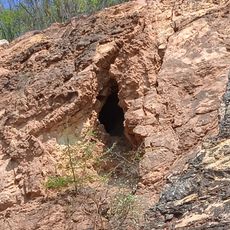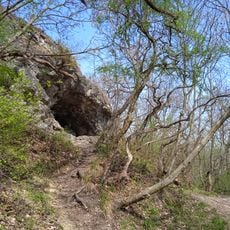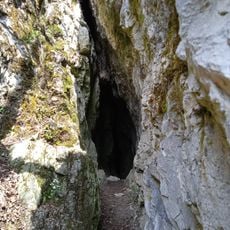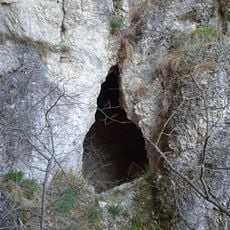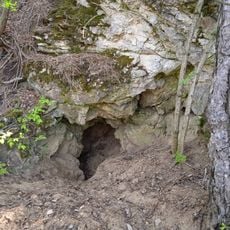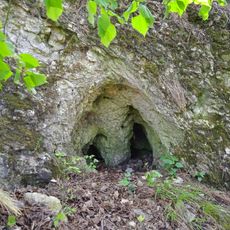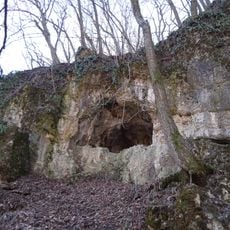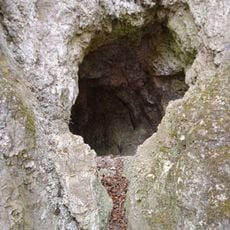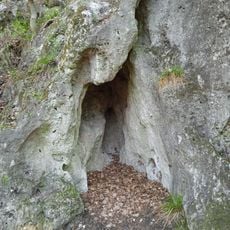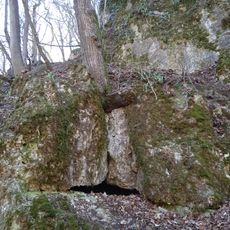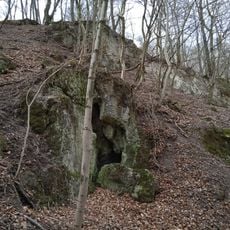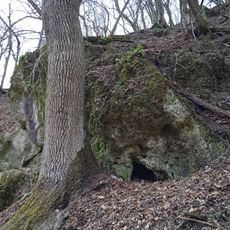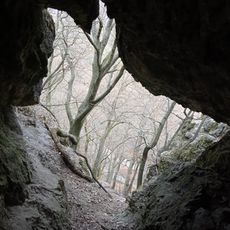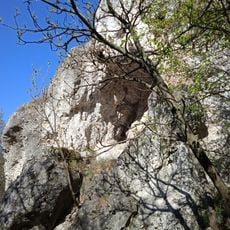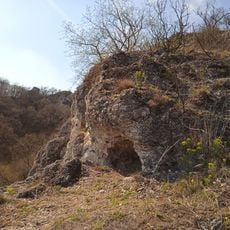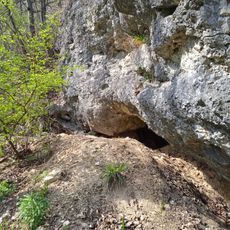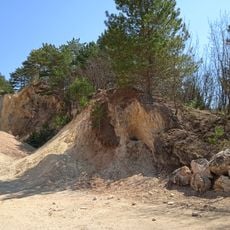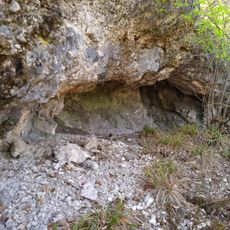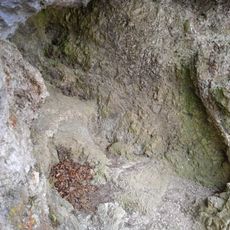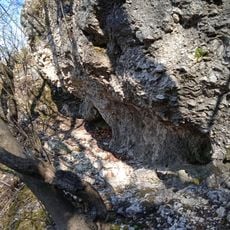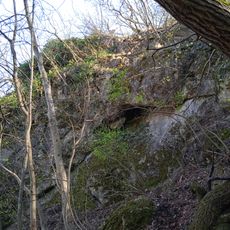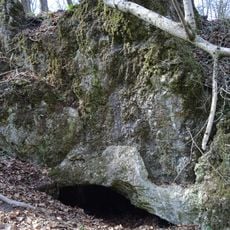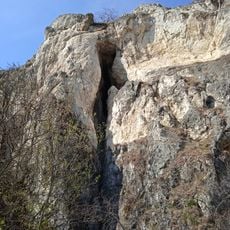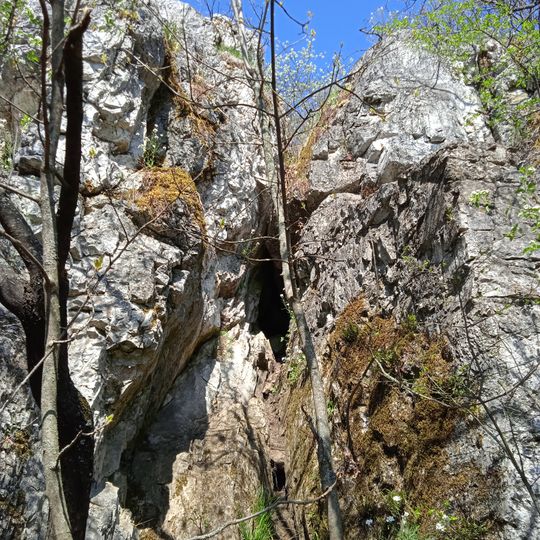
Csákvári Cave, Natural cave formation in Csákvár, Hungary.
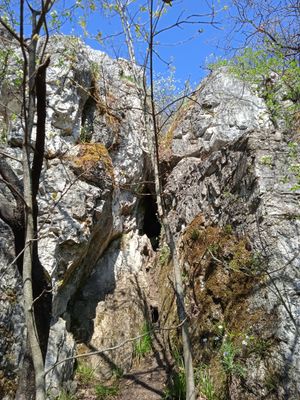
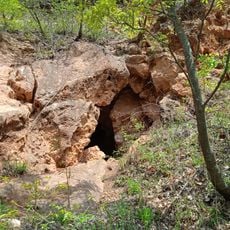
Csákvári Cave opens at 190 m above sea level in the eastern rock wall of Nagy-hegy (Guba-hegy), on the outskirts of Csákvár. Its passages follow nearly perpendicular fissures in Upper Triassic dolomite, with three openings forming an almost right-angled space in front. The central entrance, an inverted V about 6–7 m high, leads into a 30 m westward passage decorated with fossil and active dripstone flows.
The cave was first described in 1829 by Mihály Holéczy in the journal Tudományos Gyűjtemény, which recorded the name Bárocz' háza and two inscribed blocks near the entrance. In Roman times a sanctuary of Diana was set up inside, as a Latin inscription records: Marcus Aurelius Constantinus, a veteran of the praetorians, fulfilled his vow at his own expense. Excavations also yielded tools and jewellery of Würm-glacial people, among them a finger bone of a human who lived 50,000–30,000 years ago.
The cave's name changed repeatedly in the literature: Báracháza in 1926, Esterházy-barlang in the 1930s after Esterházy Móric, and Csákvári-barlang only from 1939. A Roman-era Latin inscription sits about 2 m above the floor left of the third fissure, but its full text is hard to read because of natural decay and recent graffiti.
The site sits on a mountainside and is reachable by a marked trail starting from Csákvár. Sturdy footwear is advisable, and visitors should be prepared for damp conditions inside the cave.
The cave holds an unusual concentration of fossils from different time periods in its layers. These remains offer a window into the diverse animal life that once inhabited the region.
The community of curious travelers
AroundUs brings together thousands of curated places, local tips, and hidden gems, enriched daily by 94,026 contributors worldwide.