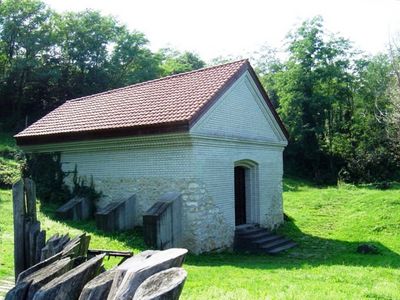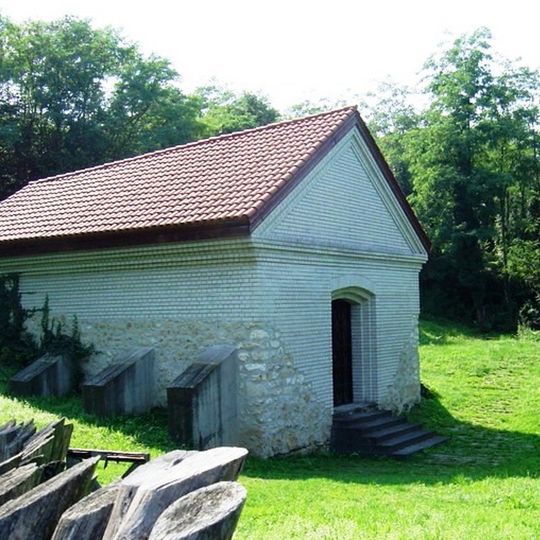
Fertőrákos mithraeum, Roman temple sanctuary in Fertőrákos, Hungary.
The Fertőrákos mithraeum is an underground temple with a trapezoidal floor plan and a vaulted stone ceiling. Its southern and eastern walls are carved directly from bedrock, while the other sides are built from stone masonry.
Two altars naming men from Carnuntum, including Lucius Avitus Maturus, a decurion, appear to have prompted the temple's construction around the start of the 3rd century AD. After György Malleschitz found the site in 1866, a local magistrate funded the restoration of the shrine's stone vault, the first reconstruction attempt at any archaeological site in Hungary. That roof was later demolished and the present cover building erected after excavations in 1990–1991.
Two altars name men from Carnuntum: Lucius Avitus Maturus, a decurion of the colony, and Septimius Iustinianus, armourer of Legio XIIII Gemina Antoninianae. Their vows, fulfilled willingly and deservedly, suggest their dedications prompted the temple's construction. The finds, including the altars, are kept in the museum at Sopron.
Access requires descending four steps into the main chamber, which sits roughly 80 centimeters below ground level. Visitors should expect low ceilings and dim lighting, and wearing comfortable shoes is recommended.
The trapezoidal shape is unusual for Roman temples and resulted from adapting to the natural rock formation of the quarry site. This compromise between religious design ideals and the constraints of the landscape reveals how practical concerns shaped sacred spaces.
The community of curious travelers
AroundUs brings together thousands of curated places, local tips, and hidden gems, enriched daily by 94,349 contributors worldwide.