Monastery of the Holy Cross, Orthodox monastery in the Valley of the Cross, Jerusalem, Israel
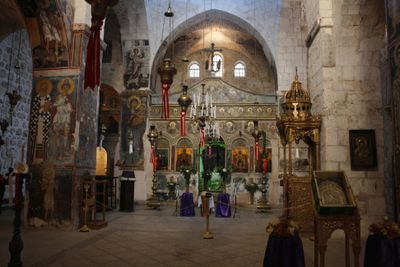
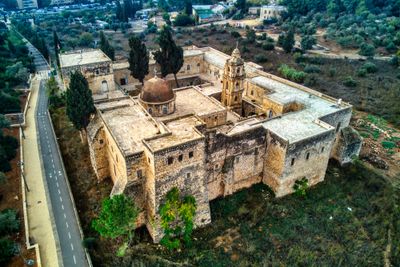
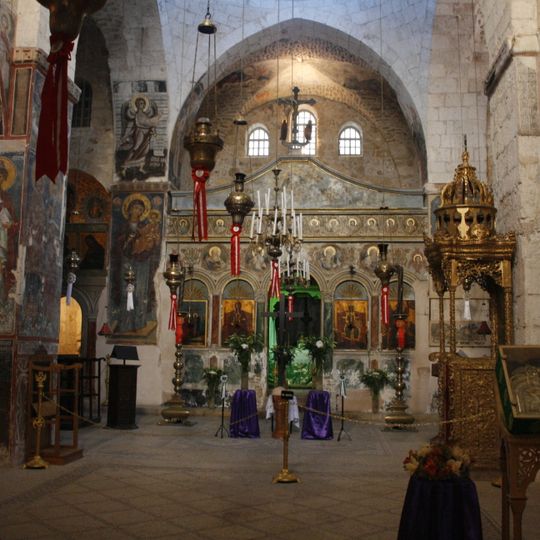
The Monastery of the Holy Cross is a fortified stone complex in the Valley of the Cross, below the Israel Museum and the Knesset. Its flat, weathered roof holds a reddish-brown dome on a drum with small arched windows and a slender bell tower. Inside, a vaulted stone room with a tiled floor contains a gold-backed iconostasis, dark metal lamps on chains, and framed paintings of haloed figures.
The first basilica on the site dates to the 4th century, when Emperor Constantine granted the land to King Mirian III of Kartli. This early religious foundation became the basis for the monastery that stands today.
The monastery walls display medieval frescoes, including a portrait of Georgian poet Shota Rustaveli, who wrote The Knight in the Panther's Skin. Visitors can still see these artistic works while walking through the complex today.
The monastery is managed by the Greek Orthodox Patriarchate and welcomes visitors who can walk through the courtyards and chapel. Inside you will find a museum displaying historical artifacts, a coffee shop, and a gift shop.
The only surviving medieval portrait of the Georgian poet Shota Rustaveli is a fresco on a column inside the church. In June 2004, shortly before a visit by President Mikheil Saakashvili, unknown individuals scratched out the face and part of the inscription; Georgia formally complained to Israel. Cleaning later revealed Georgian inscriptions that had been painted over with Greek ones in the 1970s and 1980s.
The community of curious travelers
AroundUs brings together thousands of curated places, local tips, and hidden gems, enriched daily by 92,634 contributors worldwide.