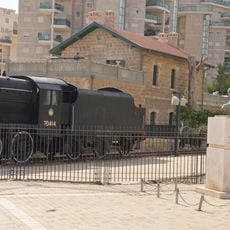
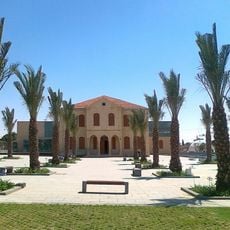
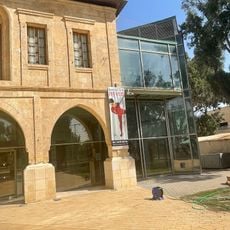
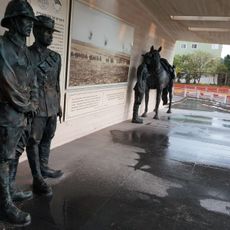
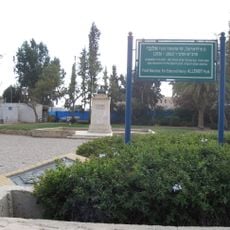
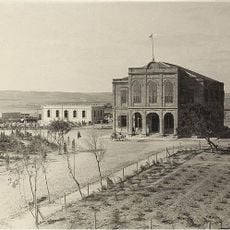
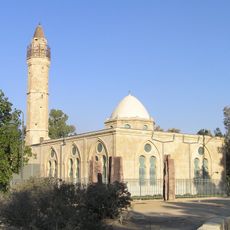
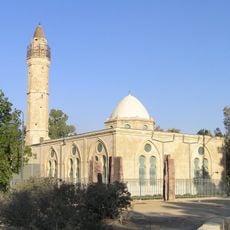
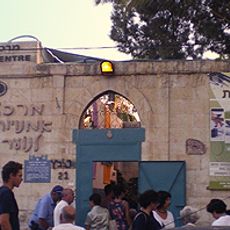
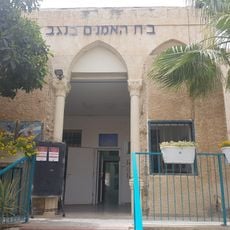
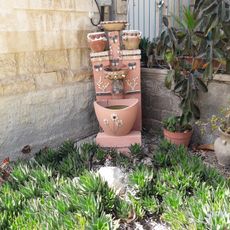
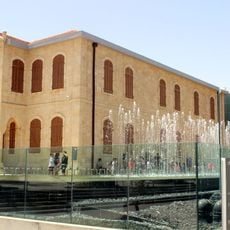
Abraham's well, Biblical water well museum in Beersheba, Israel.
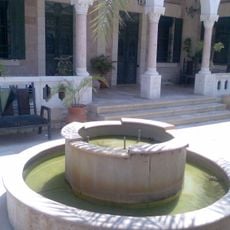
Abraham's well is a museum built around an ancient stone shaft in central Beersheba, Israel, giving visitors direct access to the well and to objects found in the surrounding area. The building is designed so that you can look down into the shaft and see the worn stone walls up close.
The well at Beersheba is mentioned in the Bible as the place where Abraham and later Isaac made agreements with local rulers, giving the city its name. In 1838, researcher Edward Robinson documented the site and linked it to those biblical accounts, bringing it to wider attention.
The well's name comes from the biblical account in Genesis, where Abraham digs a well at Beersheba and Abimelech's men seize it. A local sheikh built a house over the well in 1897, and today the site holds a visitor centre opened in October 2013 that recounts Abraham's journeys with audiovisual displays and a guided tour of about an hour.
The site sits in central Beersheba and is easy to reach on foot from the old city area, with signs pointing the way. Inside, there are stairs and narrow walkways, so wearing comfortable shoes makes the visit easier.
A stone tablet set fifteen courses down on the south side of the large shaft carries an Arabic inscription dated 505 AH, in the 12th century, as Claude Reignier Conder recorded in the late 19th century. The upper stones are grooved by more than a hundred rope channels cut over seven centuries of water-drawing.
The community of curious travelers
AroundUs brings together thousands of curated places, local tips, and hidden gems, enriched daily by 92,638 contributors worldwide.