Turkish Railway Bridge near Beersheba, Historical railway bridge in Beersheba, Israel
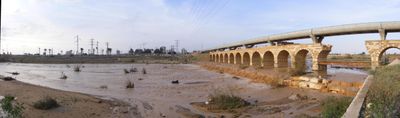
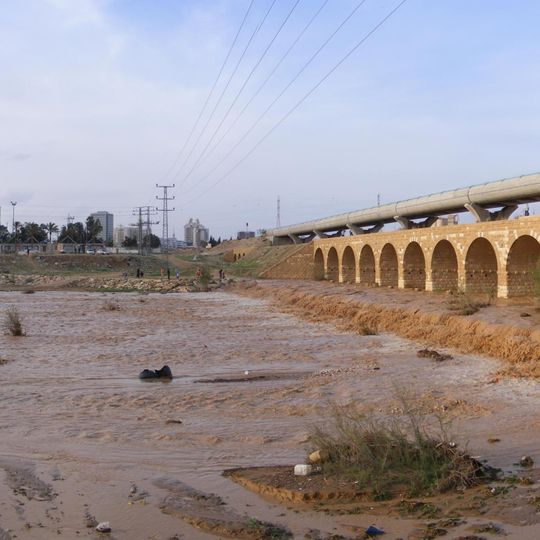
The Turkish Railway Bridge near Beersheba crosses the Beersheba River using multiple stone arches that support the railway line above. The structure features solid stonework and robust joinery that was carefully engineered to span the riverbed without intermediate supports in the middle.
Built in 1916 by Jewish contractors Michael Ehrlich and Eliahu Yanovsky for the Ottoman army, the bridge carried the military railway from Nahal Sorek toward Kuseima. Work began in January 1916; a flood destroyed the foundations, typhus struck the workers, and British bombing killed some. The bridge was used until May 1917, then again for traffic to the British police station at Bir Asluj until 1920. After 1948 it was paved for vehicles, closed to cars in 1962, damaged by a flood in 1965, and restored for pedestrians in 2017.
The bridge stands as a physical reminder of Ottoman presence in the region and shows how engineering shaped everyday movement across the landscape. Today, visitors walking near it can observe the practical methods used to build such structures without modern machinery.
The site is accessible by walking paths that run along the riverbanks and offer views from different angles. The best times to visit are morning or afternoon when sunlight highlights the stonework and details of the arches.
The bridge relies on stone arches fitted together without modern mortar, using only the weight and shape of each block to stay in place. This dry-stacking technique allowed the structure to shift slightly with seasonal changes and river movement, keeping it stable for over a century.
The community of curious travelers
AroundUs brings together thousands of curated places, local tips, and hidden gems, enriched daily by 93,692 contributors worldwide.