Deir Sam'an, Archaeological site in Salfit Governorate, Palestine
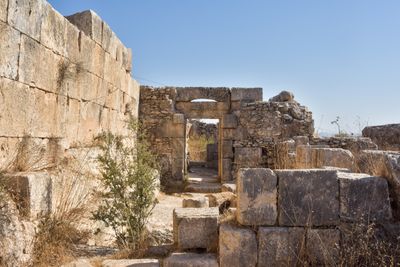
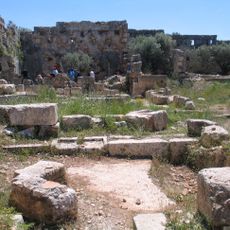
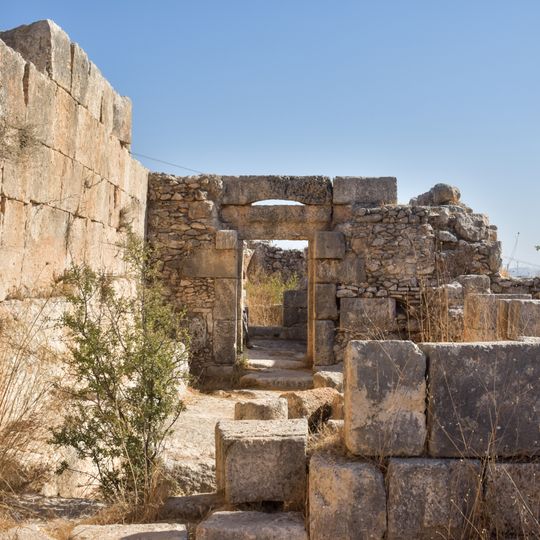
Deir Sam'an is a ruined Byzantine agricultural farm on a rocky spur at 360 metres, within the Israeli settlement of Leshem in the western Samaria hills. A large ashlar wall encloses rooms and narrow streets; in the centre stand the foundations of a nearly square basilica, about 40 by 40 metres, with a surviving southern apse and mosaic floor. A rectangular doorway with a carved arch in its lintel is visible in the photograph.
The farm began in the Roman period, in the early second century AD, when a rock-cut winepress and an olive press were hewn. In the Byzantine period, probably the sixth century, it was greatly expanded, and most of the remains date from then. It was likely abandoned after the Arab conquest, as the grape industry declined under the Muslim ban on wine.
Despite the name Deir Sam'an (Monastery of Simon), no monks are known to have lived here; scholars think the name marked the farm as Christian-owned. Carved stone crosses, baptismal basins and a sundial with a cross set into the large winepress show the owners' faith. Villagers from Leshem plant trees at the site on Tu BiShvat.
Access to the site requires necessary permits, and it is wise to check current conditions beforehand. Visitors should wear sturdy shoes and be prepared for uneven ground.
A sundial carved with a cross sits on the north side of the large round threshing floor, the Baydar, which was also used for military training. A channel about a metre deep and ten metres long cut into the rock west of the floor leads to three pools inside it.
The community of curious travelers
AroundUs brings together thousands of curated places, local tips, and hidden gems, enriched daily by 92,638 contributors worldwide.