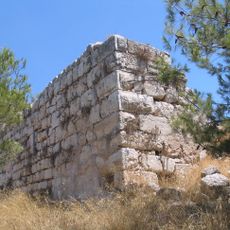
Dir-Qala, Archaeological site in Palestine
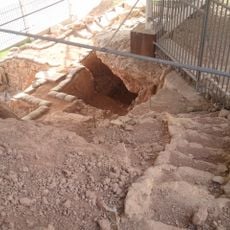
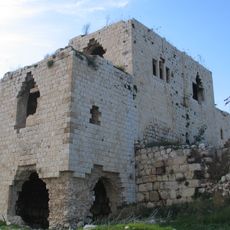
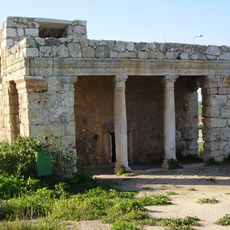
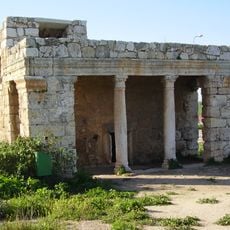
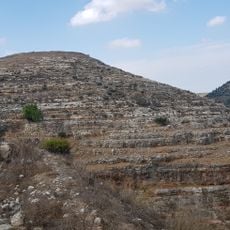
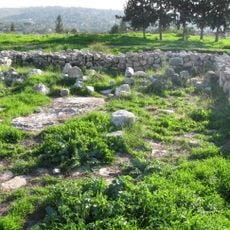
Dir-Qala is a Byzantine-era ruin built on several levels, measuring 47 by 45 metres, with an outer wall of dressed ashlar stones. Its entrance has a large lintel carved with a cross, and coloured mosaic paving stones were found in the floor. Vaulted cellars lie beneath the structure, and the site stands about 100 metres west of Paduel, overlooking the coastal plain and the Shiloh streambed below.
Archaeologists believe the Romans first built a fortress here, which became the base of the Byzantine settlement. Yizhar Hirschfeld dated the monasteries to the 6th century, after the Byzantine Empire crushed the Samaritan revolts and northern churches lay in ruins. The 1873 British survey of Western Palestine recorded the church apse and farm. In 2020 Israel's Civil Administration issued an order expropriating the land, owned by Palestinians from Deir Ballut.
The prefix "Deir" (monastery) marks Dir-Qala as one of 28 sites with that prefix on the southwestern slopes of Samaria, of which only the southern ones kept Christian remains. Archaeologists Yoel Elitzur and Haim Ben-David suggest Dir-Qala and nearby Khirbet Deir Sam'an formed part of a border line between the Samaritan north and the Christian south.
You can reach the site on foot, but there are no facilities on the grounds, so bring water and sun protection. The terrain and weather conditions change with the seasons, so wear sturdy shoes and plan your visit accordingly.
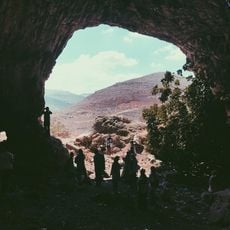
Local residents say the underground cellars beneath the building connect by tunnel to the foot of the mountain. The claim has never been verified, but the vaulted basements are real, and octagonal eight-pointed crosses carved in stone — Hospitaller-style Maltese crosses — were found at the site, though it is unclear whether the order ever lived here.
The community of curious travelers
AroundUs brings together thousands of curated places, local tips, and hidden gems, enriched daily by 94,367 contributors worldwide.