Shuqba cave, Archaeological cave in Ramallah and al-Bireh Governorate, Palestine.
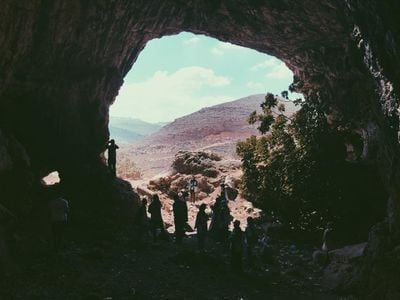
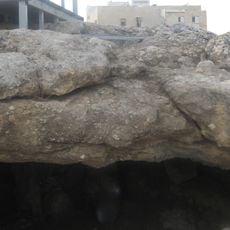
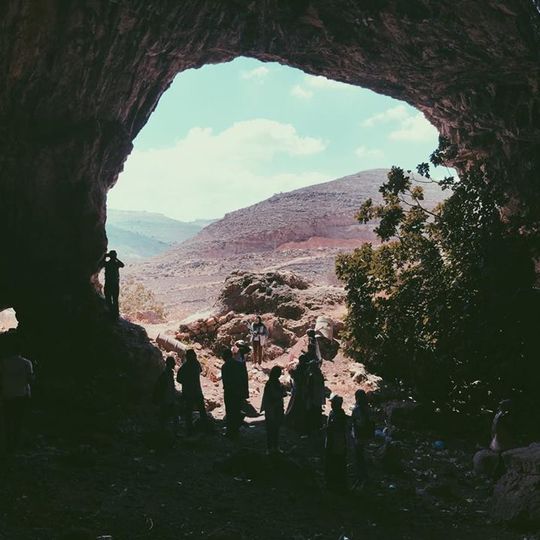
Shuqba Cave opens on the northern bank of Wadi en-Natuf as a large, irregular rock arch with a dark brown and grey inner surface. Inside, a main chamber about 18 metres across is joined by three side chambers and two ceiling openings known as rawzana. Calcium carbonate in dripping water hardens parts of the surface, while other areas show water erosion.
Alexis Mallon first investigated the cave in 1924, then Dorothy Garrod excavated it in 1928, identifying a stratified Mesolithic layer she named Natufian. Her team found crescent-shaped lunates, worked bone and 45 human skeletons. A reexamined tooth found by Garrod is the southernmost Neanderthal evidence known.
The name Shuqba comes from the many cracks in the rock and from a queen said to have lived in the cave. The site gave its name to the Natufian culture, defined here by Dorothy Garrod after her 1928 excavation, and local workers, including women from nearby villages, took part in the digs.
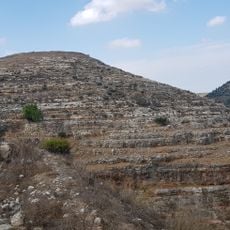
The cave lies on the northern bank of Wadi en-Natuf, about a kilometre south of Shuqba town, 28 km northwest of Jerusalem. Since 2000 road building, a bypass road and a security wall have restricted approach, making access from the Palestinian side harder and from the Israeli side impossible. The site sits in Area C, where Palestinian restoration and paving of the path are not permitted.
A fossilised tooth found by Dorothy Garrod in the cave was later reexamined and identified as Neanderthal, the southernmost evidence of the species ever discovered. It raises the possibility that Neanderthals, coming from Eurasia, reached Africa while fleeing the advancing northern glacial climate.
The community of curious travelers
AroundUs brings together thousands of curated places, local tips, and hidden gems, enriched daily by 93,118 contributors worldwide.