Ein Hinya, Archaeological site and national park in Jerusalem District, Israel
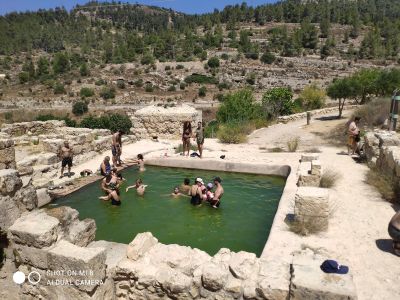
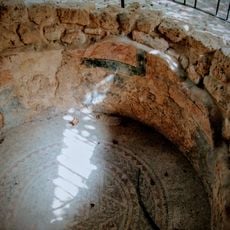
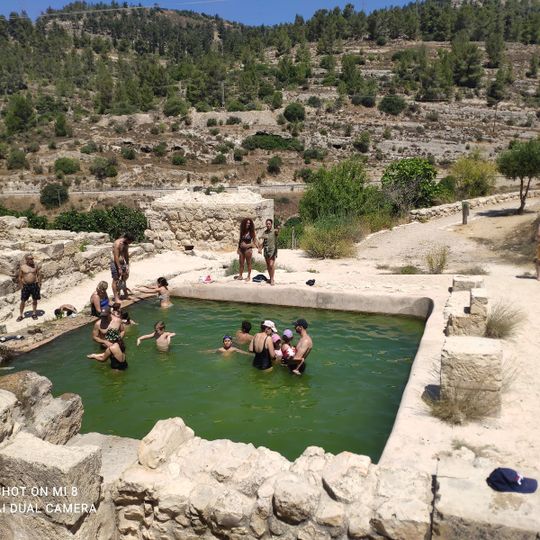
Ein Hinya is an archaeological site and national park in the Jerusalem hills with multiple natural water springs. The springs emerge from the ground and form a system of natural pools through ancient dam constructions.
Archaeological digs at the spring uncovered remains from the First Temple, Second Temple, Roman and Byzantine periods. Archaeologist Yuval Baruch found a fragment of a proto-Aeolic capital and concluded that a royal estate stood here in the First Temple period. The spring area and the antiquities around it belong to the Armenian Church.
The spring was a meeting place for Jews, Muslims and Christians from Jerusalem, Bethlehem, Gush Etzion and the nearby villages of al-Walaja and Battir. Annual tashlich ceremonies, Eid al-Fitr celebrations, Ethiopian Church rites and the collection of 'mayim shelanu' water before Passover are held around the pool. In November 2010 Jews and Muslims from the Bethlehem area held a joint rain prayer here.
The spring sits on the left side of the road that runs from the Malha canyon toward al-Walaja and Har Gilo, part of the springs trail and close to the Israel Trail, so many hikers detour to reach it. The site reopened on 23 March 2021 as a nature reserve managed by the Israel Nature and Parks Authority, and entry is paid. A Border Police barrier was placed in February 2018 between the spring area and Palestinian Authority land.
The spring pool measures about 8 by 10 metres and reaches 2 metres deep, making it one of the largest in the Judaean hills. Its water comes from two small caves beside the pool. Archaeologist Yuval Baruch found a proto-Aeolic capital fragment here and proposed that a royal estate stood on the site in the First Temple period.
The community of curious travelers
AroundUs brings together thousands of curated places, local tips, and hidden gems, enriched daily by 92,638 contributors worldwide.