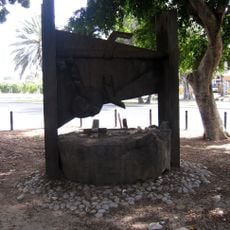
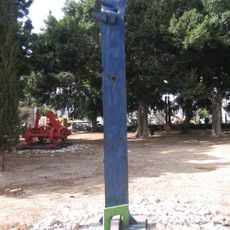
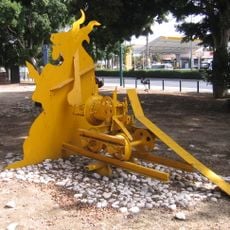
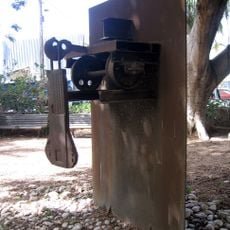
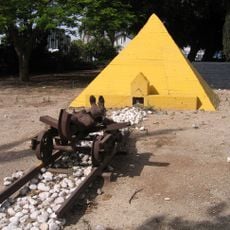
Gan HaHagana, Urban park in Abu Kabir neighborhood, Tel Aviv, Israel
Gan HaHagana is a public park in a residential area in the south of Tel Aviv. It features pine trees, paved paths for cycling and walking, play areas, and benches spread across the grounds.
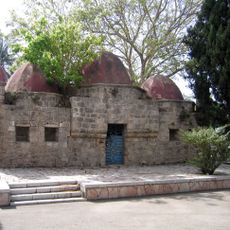
The park was created after the 1948 War of Independence, when pine groves were planted over the ruins of Abu Kabir houses and orchards. It was first called Gan HaHagana and later became known as Park HaHorshot. Restoration began in 2011, and in 2013 the southern 80-dunam section opened to the public.
The park sits in a residential neighborhood in the south of Tel Aviv and draws a mix of families, joggers, and dog walkers throughout the day. By late afternoon, the benches and open areas fill up with people from the surrounding streets.
The park has several entrances on different sides, so you can enter from whichever street is closest to you. Early morning and late afternoon tend to be cooler and more comfortable for a visit than midday.
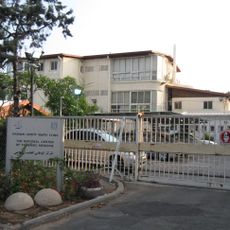
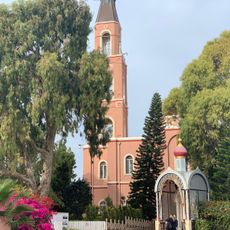
The park's name, Gan HaHagana, means "Garden of the Haganah," recalling the capture of Abu Kabir in the 1948 war, after which pine groves were planted over the destroyed neighbourhood. The northern edge is formed by the Saint Peter's Church compound and the School of Nature, Environment and Society; the Institute of Forensic Medicine lies to the south.
The community of curious travelers
AroundUs brings together thousands of curated places, local tips, and hidden gems, enriched daily by 92,637 contributors worldwide.