Nalanda Mahavihara, Buddhist mahavihara archaeological site in Nalanda, Bihar, India
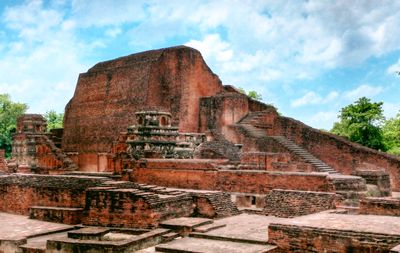
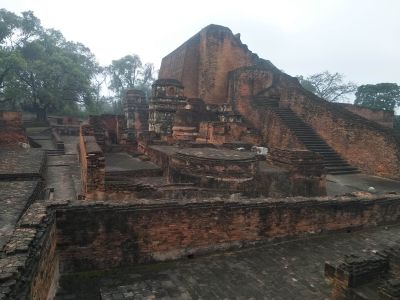
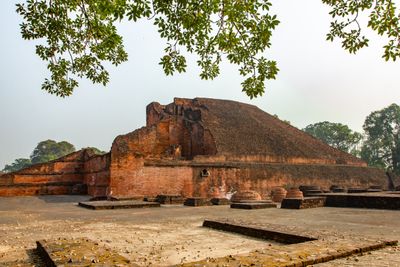
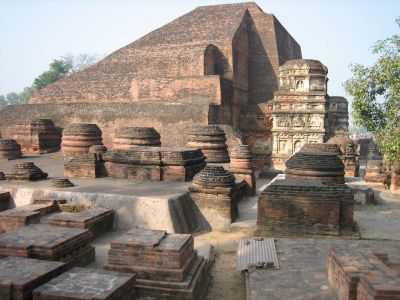
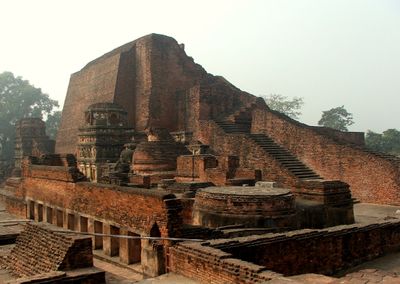
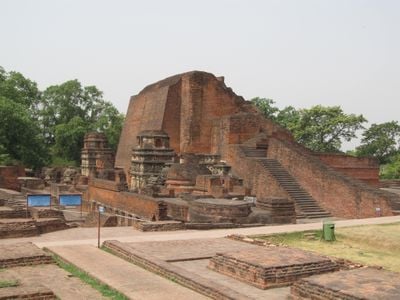
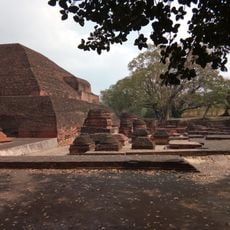
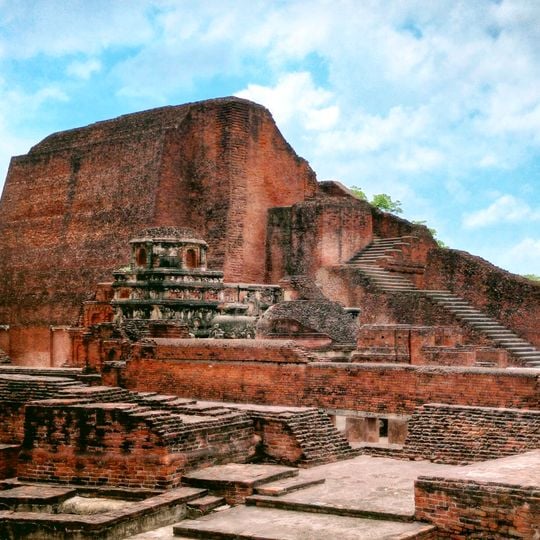
Nalanda Mahavihara is an archaeological site in Nalanda, India, displaying the remains of an ancient Buddhist educational institution. The excavated red brick structures extend across roughly 14 hectares and include monasteries, temples, dormitories and lecture rooms connected by narrow passages and open courtyards.
The mahavihara was established around 450 CE under King Kumargupta I as a Buddhist teaching monastery. It grew over centuries into a major center for religious study before being destroyed by Turkish forces in 1199.
Xuanzang, a Tang-dynasty pilgrim, studied and taught here in the 7th century under the abbot Śīlabhadra. Xuanzang records that the name Nālandā came from a nāga, a serpent deity, of that name; the archaeologist Hiranand Sastri instead linked it to nālas, the lotus stalks that grew in the area's lakes.
The excavated areas include meditation halls, lecture rooms, temples and a museum displaying Buddhist sculptures, pottery and carbonized rice grains from the twelfth century. Visitors should wear sturdy footwear as the paths between ruins are uneven and expect direct sun exposure while exploring the grounds.
The library extended across nine stories and housed more than three hundred thousand manuscripts on topics from Buddhist philosophy to mathematics. Around two thousand teachers instructed students from different countries, making this institution the first internationally organized residential university in documented history.
The community of curious travelers
AroundUs brings together thousands of curated places, local tips, and hidden gems, enriched daily by 92,160 contributors worldwide.