Great Himalayan National Park, National park in Kullu District, Himachal Pradesh, India.
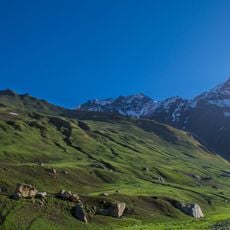
Great Himalayan National Park is a nature reserve and national park in Himachal Pradesh, India, covering forests, meadows and summits across 1,171 square kilometers. Rivers carve through valleys while fir and oak stand on slopes that rise toward the snow line.
Surveys of the Tirthan, Sainj and Jiwanal watersheds began in 1980, and the Himachal Pradesh government declared its intention to create the park in 1984. Local forest rights were settled from 1988, and a World Bank-funded biodiversity project from 1994 to 1999 set up 16 village eco-development committees. The park was formally inaugurated in 1999, and in 2014 the 38th World Heritage Committee meeting in Doha inscribed it as a UNESCO World Heritage Site.
Butterflies found within the reserve display over 180 species that move between the rhododendron forests and the grassland zones at higher altitudes. Plants such as juniper and cedar grow across steep slopes and create woodlands that cast shade over the walking trails.
Trekking and wildlife watching work best between March and June and from September to November when snow has not yet blocked the trails. Visitors should follow guidance from rangers as some zones require permits.
The Western Tragopan, a bird with red plumage and blue markings, lives in dense undergrowth and calls out during early morning hours. Leopards and tahr use rock ledges and forests for shelter and remain mostly hidden from hikers.
The community of curious travelers
AroundUs brings together thousands of curated places, local tips, and hidden gems, enriched daily by 93,292 contributors worldwide.