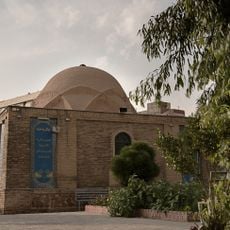
Imam Khomeini Mausoleum, Mausoleum in Behesht-e Zahra, Tehran, Iran
The Mausoleum of Ruhollah Khomeini stands beside the Behesht-e Zahra cemetery south of Tehran. Its gold dome sits on a high drum ringed by arched windows and a blue-tiled frieze with geometric patterns and Arabic inscription bands. Four golden minarets rise at the corners, each 91 metres tall with a balcony and spire; ribbed white pointed roofs and a smaller blue dome stand alongside.
Work on the tomb started shortly after Ayatollah Ruhollah Khomeini, founder of the Islamic Republic, died in June 1989. Construction continued for many years and expanded in stages to accommodate additional burials.
The site is called Haram Motahhar, the purified shrine, and its commemoration of Khomeini peaks each 4 June, the anniversary of his death, when officials, foreign ambassadors and thousands of pilgrims gather. A Arabic-language ziyarat-nama was long displayed at the tomb, and the formal ceremony Tajdid-e Bayat renews allegiance to Khomeini's ideals. His grandson Seyyed Hassan Khomeini oversees the mausoleum's care.
The site is open at all hours and entry is free. Women should cover their hair and wear loose, long clothing, while men are expected to wear long trousers and a sleeved shirt.
Next to the main grave lie the tombs of Khadijeh Saqafi, his wife, and several political figures from Iran's recent history. The surrounding grounds are planned to include an Islamic university, a seminary, a shopping center, and parking for thousands of vehicles.
The community of curious travelers
AroundUs brings together thousands of curated places, local tips, and hidden gems, enriched daily by 94,669 contributors worldwide.