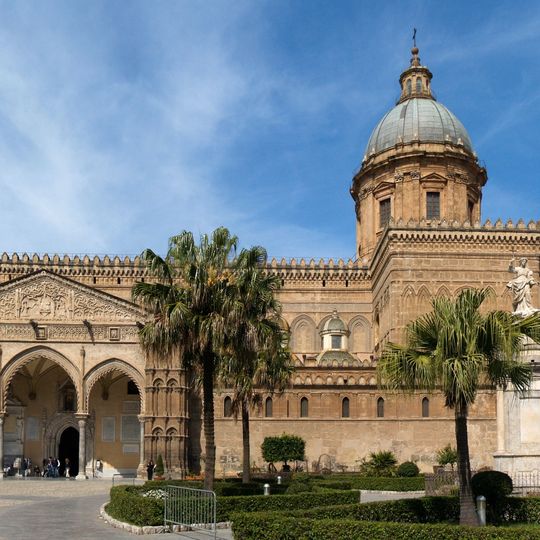
Palermo Cathedral, Medieval cathedral in Palermo, Italy
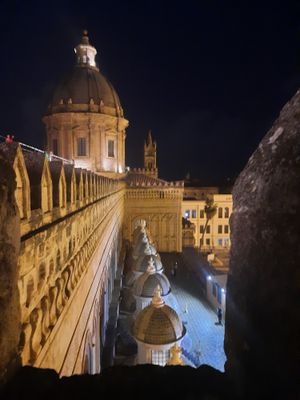
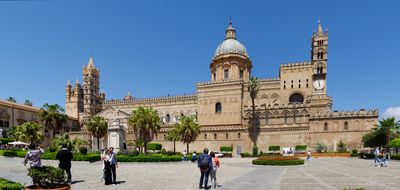
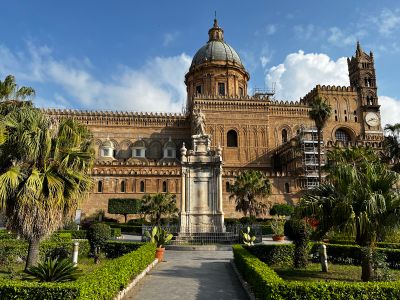
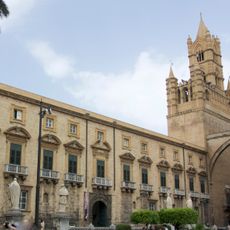
Palermo Cathedral is a large religious building in Palermo that combines Norman, Arab and Gothic construction styles. Two tall towers frame the main entrance, while the interior holds several chapels and a wide nave.
Archbishop Walter founded the cathedral in 1185 on a site where a Byzantine church once stood, later turned into a mosque. Over the centuries, later rulers and churchmen added chapels, tombs and new facade elements.
Every 15 July, a silver urn made between 1631 and 1637 is carried through Palermo's streets in procession, holding the relics of Santa Rosalia, the city's patron saint. Her chapel, on the southern side, is closed by a bronze gate. The first column of the south portico came from the original basilica and later mosque, and bears a carved Qur'an verse.
Entry to the church itself is free, while a separate climb to the rooftops and royal tombs requires a ticket. Early morning hours work well for a quieter visit before tour groups arrive.
A bronze line set into the floor runs precisely north-south: it is the meridian built in 1801 by Giuseppe Piazzi, director of the Palermo Observatory and discoverer of the asteroid Ceres. A pinhole in one of the minor domes projects the sun's image onto the line, which shifts with the seasons and is visible at solar noon, around 12:00 in winter and 13:00 in summer.
The community of curious travelers
AroundUs brings together thousands of curated places, local tips, and hidden gems, enriched daily by 93,795 contributors worldwide.