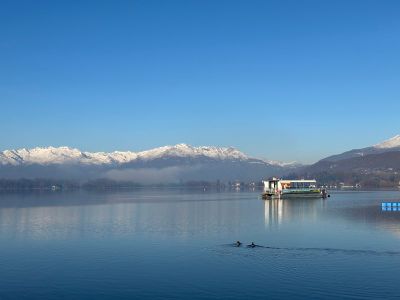
Lago di Viverone, Glacial lake in Piedmont, Italy
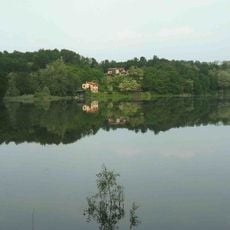
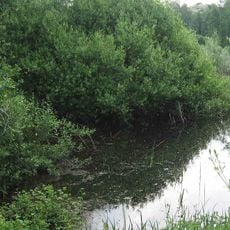
Lake Viverone lies at 230 m above sea level in the Ivrea moraine amphitheatre, mostly in the province of Biella with its western part in the metropolitan city of Turin. It measures 5.72 km², is 3,470 m long and 2,550 m wide, with a maximum depth of 50 m and a 13.06 km perimeter. The north and east shores are built up with beaches, campsites and hotels, while the south-west is wooded and marshy.
Bronze Age pile-dwelling villages stood here in two phases, around 1500–1450 BCE and 1050–1000 BCE. Guido Giolitto, honorary inspector for underwater archaeology, led the first surveys between 1965 and 1976; in 1996 an official dig found a field of stakes near Cascina Nuova in the Masseria hamlet. The submerged settlement joined the UNESCO World Heritage list in 2011 (ID 1363-102).
The lake's name changed over the centuries with the geopolitics of the area: it was called Lago di Roppolo, then Lago di Azeglio, before settling on Viverone. A local legend tells of a flying dragon that haunted the shores until Saint Bonomio defeated it around the year 1000, as recorded by the priest Carlo Benedetto.
The 13.06 km perimeter is not fully walkable: the south-western stretch is interrupted by dense lowland woods and marshland, while the northern and eastern shores are built up with beaches, campsites and hotels. The lake lies 16 km from Ivrea, 14 km from Santhià and 23 km from Biella. Bathing was largely restored in 2008 after years of prohibition.
The lake's outflow, the Roggia Fola, was long said to reverse its flow and turn from outlet into inlet; a study by ARPA-Piemonte recorded water constantly leaving the lake, disproving the tale. Its Piedmontese name Fòla means "mad".
The community of curious travelers
AroundUs brings together thousands of curated places, local tips, and hidden gems, enriched daily by 94,647 contributors worldwide.