San Giobbe, Renaissance church in Cannaregio, Italy
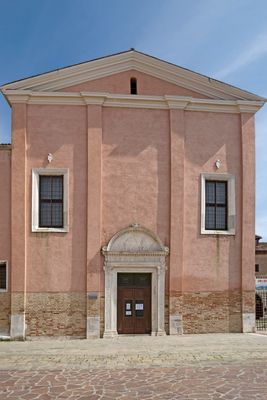
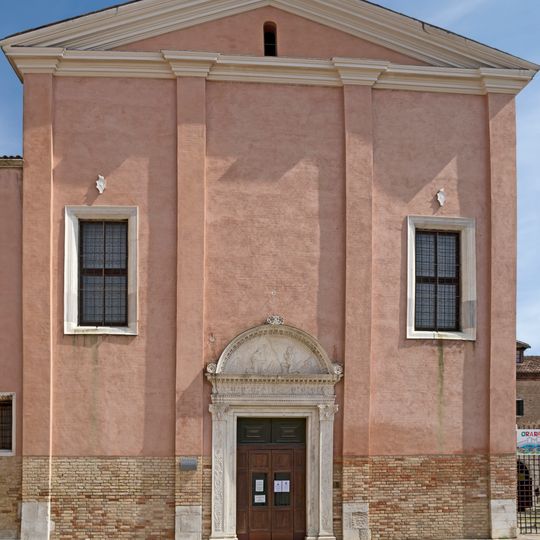
San Giobbe is a single-nave Renaissance church on the south bank of the Cannaregio canal, near the Ponte dei Tre Archi. Its salmon-pink plastered facade has two wide pilasters with pale capitals, a triangular pediment with a small round opening, and two tall grid-paned windows in white stone surrounds. Pietro Lombardo carved the arched stone portal, inscribed "DIVAE THECLAE VIRGINI", with Franciscan allegories; the lower wall is banded in exposed brick.
Construction began in 1450 following a plague outbreak, as the city sought to create a place of hope. Two major architects oversaw the work until its consecration in the final decades of the 15th century.
The church is still called San Giobbe, Sant'Agiopo in Venetian dialect, after the saint to whom the 1378 hospice oratory was dedicated. The altarpiece of the gondoliers' and boatmen's confraternity of the Marghera ferry, painted by Paris Bordon in 1565, recalls the parish's ties to the lagoon.
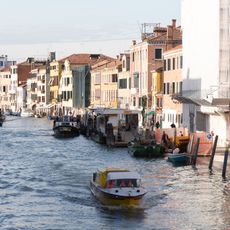
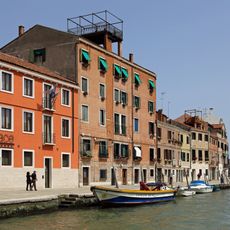
The church stands on the campo of the same name, called Sant'Agiopo in Venetian, on the left bank of the Cannaregio canal by the Ponte dei Tre Archi. It belongs to the Chorus Venezia association, whose circuit ticket covers entry; the single church is also visited on its own. Look for the marble plaque above the entrance in the wall facing the campiello, a remnant of the Sade electrical works.
The church holds the tomb of René de Voyer de Paulmy d'Argenson, French ambassador to Venice, carved by the French sculptors Claude Perreau and Thomas Blanchet. Girolamo Savoldo's Il Presepio of 1540 hangs here, while Bellini's San Giobbe Altarpiece and Carpaccio's Presentation were moved to the Gallerie dell'Accademia in 1815.
The community of curious travelers
AroundUs brings together thousands of curated places, local tips, and hidden gems, enriched daily by 93,878 contributors worldwide.