Palazzo Barbarigo Minotto, Gothic palace in San Marco, Italy
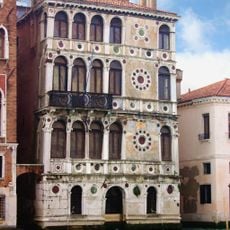
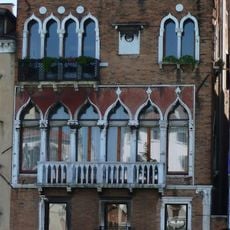
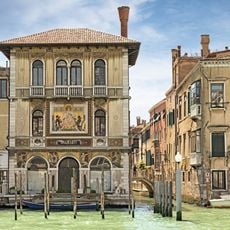
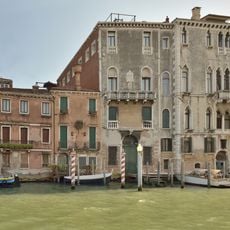
Palazzo Barbarigo Minotto is a palace made of two building sections from different periods that stretch along the Grand Canal. The facade combines Byzantine friezes with late-Gothic elements from the 15th century and displays intricately decorated windows and balconies.
The palace began as two separate buildings: the 15th-century Gothic Palazzo Minotto, which retains 12th-century Byzantine friezes, and the 17th-century Palazzo Barbarigo, merged in that century. The Barbarigo family owned it for centuries and it was the birthplace of Gregorio Barbarigo. In 1739 his marriage to Caterina Sagredo brought Tiepolo, Fontebasso, Mengozzi Colonna and Mazzetti to decorate both halves. The family died out in 1804 with Contarina Barbarigo, and the palace passed to Marcantonio Michiel's family.
The piano nobile has been leased since 2005 by Musica a Palazzo, which stages small-scale opera productions in the state rooms. The name recalls the salon concerts of the 19th century. Tiepolo's overdoor frescoes depict Merit and Abundance, and the central hall is called the room of Wisdom.
Access to the piano nobile is through Musica a Palazzo, the association that has leased it since 2005 and stages small-scale opera productions there. The rooms are used as performance spaces, so visits follow the association's programme rather than regular opening hours. The palace stands on the left bank of the Grand Canal in San Marco, beside the larger Palazzo Corner.
The domestic chapel sits in a recess of the wall, closed by two wooden leaves, and was painted in 1741 by the Ferrarese quadraturist Gerolamo Mengozzi Colonna. Around it lies a Louis XIV-style elm floor inlaid with olive-root and other wood marquetry.
The community of curious travelers
AroundUs brings together thousands of curated places, local tips, and hidden gems, enriched daily by 93,036 contributors worldwide.