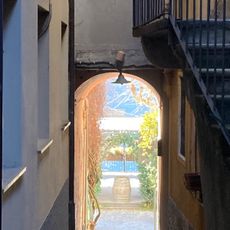
Palazzo Borromeo, Art museum and palazzo in Stresa, Italy
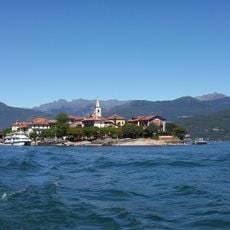
Palazzo Borromeo on Isola Bella in Lake Maggiore is a baroque building with a distinctive T-shaped layout and a long central facade facing the water. The estate contains more than 20 rooms now displaying artworks, plus numerous garden terraces that step down across several levels.
Carlo III Borromeo began the palace in 1632 and named the island after his wife, Isabella d'Adda. Work stalled during the plague, then resumed between 1652 and 1690 under his son Vitaliano VI, with architects Francesco Maria Richini and Carlo Fontana involved. Vitaliano X completed the north facade and the great hall in the 20th century. In April 1935 the Music Room hosted the Stresa Conference between Mussolini, Laval and MacDonald.
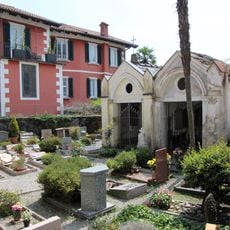
The island takes its name from Isabella d'Adda, wife of Count Carlo III Borromeo, who began the palace in 1632. The chapel on the ground floor holds objects of Saint Charles Borromeo and Cardinal Federico, and three family tombs, including the Birago monument carved by Agostino Busti, called il Bambaia, in 1522 and moved here in the 19th century.
The palace stands at the northern end of Isola Bella, reached by boat from Stresa; the gardens run to the southern tip. Inside, the ground-floor grotto rooms and the first-floor halls around the central salon lead to the gardens through the Atrium of Diana, whose two curved staircases hide the offset between palace and garden. Allow time for both the interior and the terraces.
The garden's Piano della Canfora takes its name from a camphor tree planted in 1820, a Cinnamomum camphora that still stands among six symmetrically arranged flowerbeds of exotic plants. The terraced soil itself was carried to the rocky islet by boat from the shore in the 1630s.
The community of curious travelers
AroundUs brings together thousands of curated places, local tips, and hidden gems, enriched daily by 94,672 contributors worldwide.