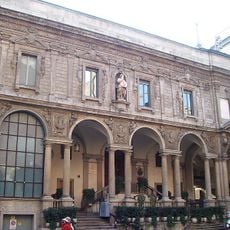
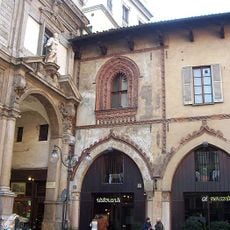
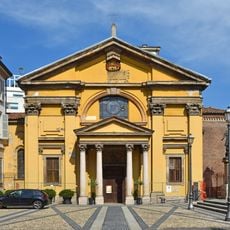
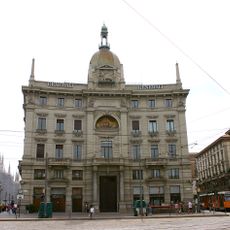
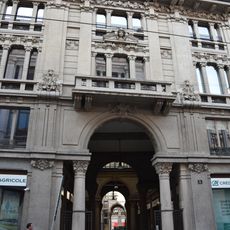
Palazzo della Banca d'Italia, Bank palace in Cordusio district, Milan, Italy
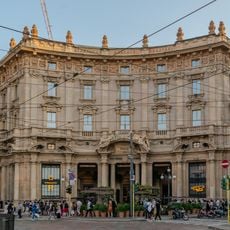
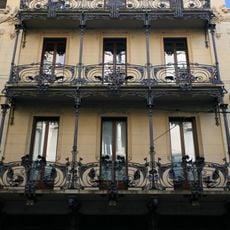
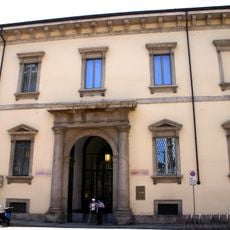
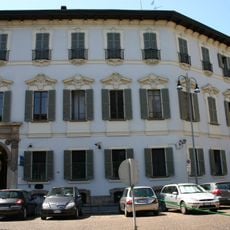
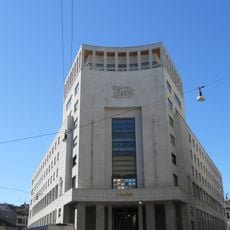
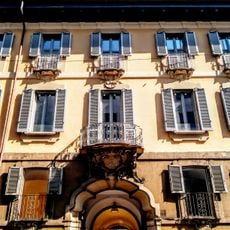
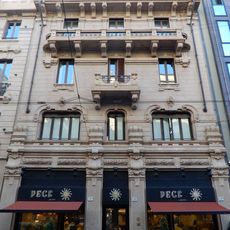
Palazzo della Banca d'Italia is a bank building in central Milan featuring Ionic columns and four caryatids above its main entrance, with architectural details reflecting eclectic design choices. The structure combines multiple artistic styles and continues to function as a bank today.
Built between 1907 and 1912 to designs by Luigi Broggi and Cesare Nava, the palazzo replaced an earlier building on via degli Omenoni. Its nearly square plan opens onto piazza Tommaso Edison, a business district created after the late-19th-century demolition of the former convent of the Bocchetto. Excavations in 1908 uncovered a large Roman building, possibly the mint, and, seven metres down, traces of a 44-metre-wide temple.
The hall's stained-glass windows were made in 1913 by the painter Carlo Bazzi. In the central salon, original period furnishings are still in place, alongside a statue by Giò Pomodoro. The entrance gate is the work of the bronze caster Giovanni Lomazzi.
The building is located in central Milan and easily accessible on foot while exploring downtown neighborhoods. Since it functions as an active bank, interior access may be limited to regular banking hours or restricted to customers.
The paired columns at the main entrance draw inspiration from the ancient Erechtheion of the Athenian Acropolis, showing how architects of that era referenced classical monuments. Banks often borrowed from ancient architecture to convey trustworthiness and permanence to their customers.
The community of curious travelers
AroundUs brings together thousands of curated places, local tips, and hidden gems, enriched daily by 92,787 contributors worldwide.