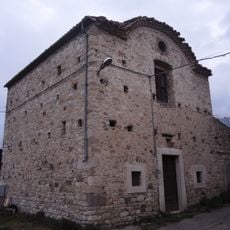
Pallanum, Archaeological site in Tornareccio, Italy.
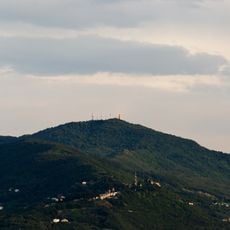
Pallanum is an archaeological site at the summit of Mount Pallano at roughly 900 meters elevation, where massive stone walls protected an ancient settlement. The fortification extends about 160 meters along the eastern ridge and displays impressive construction techniques from antiquity.
Pallanum appears for the first time in the Peutinger Table, where it is listed as a station on the road between Aternum (Pescara) and Larinum, seven miles from Anxanum (Lanciano) and twelve from Histonium (Vasto). Edward Bispham suggests a Samnite origin for the town. From the 1st century BC its population began to decline.
The name Pallanum is first recorded in the Peutinger Table, which places it as a station on the road between Aternum (Pescara) and Larinum, seven miles from Anxanum (Lanciano) and twelve from Histonium (Vasto). Local tradition, recorded at the site, credits Charlemagne with building the megalithic walls, though they were raised in the Italic period between the 6th and 3rd centuries BC.
The location sits on a mountain, so sturdy footwear and time for the climb are needed. It is wise to check ahead about accessibility and any guided visits, as the site is actively researched.
The walls originally had four gates, but only two survive: the Porta del Piano, 80 cm wide and topped by a lintel at the highest part of the site, and the Porta del Monte lower down, where the limestone blocks become smaller and the building technique changes. A local legend credits Charlemagne with raising the walls, which were actually built between the 6th and 3rd centuries BC.
The community of curious travelers
AroundUs brings together thousands of curated places, local tips, and hidden gems, enriched daily by 93,762 contributors worldwide.