Ricetto di Candelo, Medieval fortified granary in Candelo, Italy
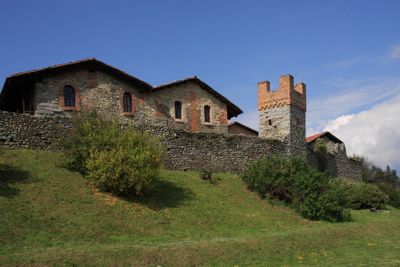
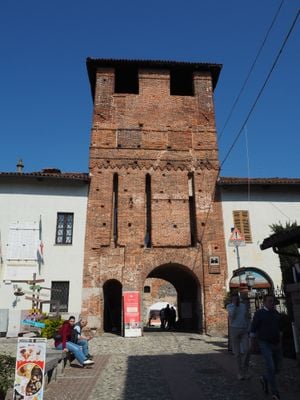
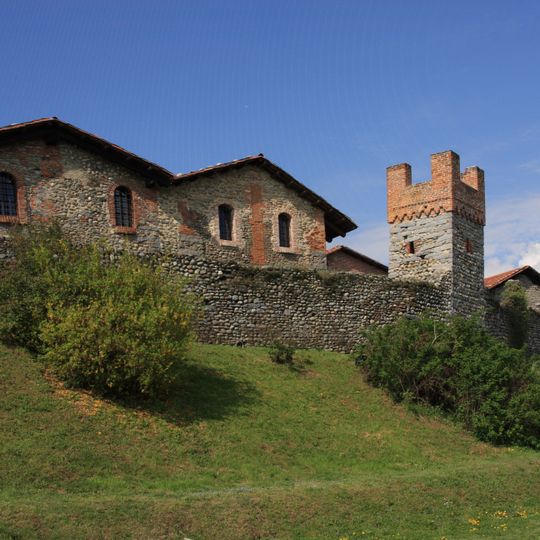
The Ricetto di Candelo is a pentagonal walled enclosure of about 13,000 m2 in Candelo, Italy, holding roughly two hundred two-storey cells used to store wine and grain. Its walls are of pebbles laid in herringbone pattern, with four round corner towers and a square tower on the north wall. The only access is a single tower-gate on the south side, with one opening for carts and one for pedestrians.
The ricetto was built between the late 13th and early 14th century on land granted by the Vialardi di Villanova, in exchange for an annual tribute of 21 ducats. Its existence is documented in 1374, when the community of Candelo submitted spontaneously to the House of Savoy. In 1458 Spanish troops allied with the duke of Savoy forced the French barricaded inside to surrender, causing damage repaired in 1561. From 1496 Sebastiano Ferrero held the fief and raised several cells into the fortified tower known as the casa del Principe.
The cells were never permanent homes: owners use them today as weekend meeting places, food and wine businesses and craft workshops. Among the workshops is that of Annelie Weischer, a German-born painter on silk. The Pro Loco runs guided tours and educational workshops by reservation, and in December the ricetto becomes Santa's village with a living nativity scene.
Visitors can walk through the entire area, though the narrow cobblestone lanes require sturdy footwear. Guided tours on weekends and during local festivals provide access to some of the historic storage houses.
The site is one of the best preserved fortified granary complexes in Europe, with many rooms still showing original wooden beams and stone floors. Once a year locals transform the grounds into a medieval market with period costumes and traditional craft demonstrations.
The community of curious travelers
AroundUs brings together thousands of curated places, local tips, and hidden gems, enriched daily by 92,788 contributors worldwide.