Villa Ginori, Villa in the Doccia district, Sesto Fiorentino, Italy
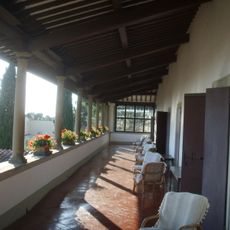
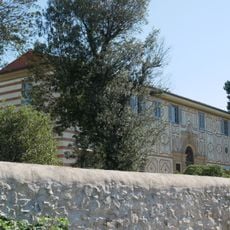
Villa Ginori is a villa in the Colonnata area of Sesto Fiorentino, with its main facade facing south. An 18th-century print shows a large first-floor loggia and tall arched windows of late-Renaissance character. Behind it, the wooded hillside is cut by the 17th-century Viottole Ginori, which climbs to the top of Monte Acuto; to the north lie the Italian garden, geometric citrus groves and the ragnaia.
A first building stood here in the 14th century, owned by the Della Tosa family. In 1525 the property passed to the Ginori, who enlarged it to its present size from the early 17th century. In 1818 Marquis Carlo Leopoldo Ginori laid out the wooded park and built via Piana to link Doccia with the villa at Carmignanello.
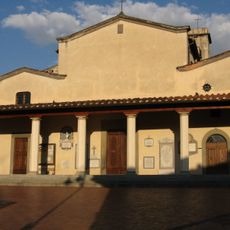
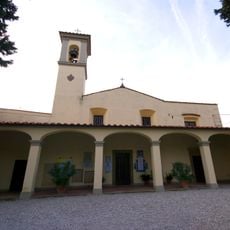
The vault and altar of the villa's chapel were frescoed by Luigi Sabatelli. The chapel is part of the estate that Carlo Ginori shaped in the 18th century, when the gardens and grounds were reworked. Visitors can see the painted ceiling and altarpiece inside the chapel.
The rear of the villa faces the wooded hillside, cut vertically by the 17th-century ViottoIone Ginori, a scenographic avenue climbing to the summit of Monte Acuto. Carlo Leopoldo Ginori built Via Piana in 1818 to link the villa with that of Carmignanello, and the naturalistic park is crossed by paths and carriage roads.
Carlo Ginori sent scholars from Doccia to China and Japan to learn porcelain-making; they returned with rare plants and fish that stocked the villa's gardens. In 1730 he reshaped part of the garden into one of Florence's best-known botanical gardens, and an 18th-century print shows the large stove built to grow exotic plants.
The community of curious travelers
AroundUs brings together thousands of curated places, local tips, and hidden gems, enriched daily by 94,349 contributors worldwide.