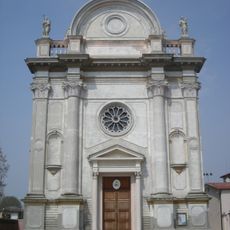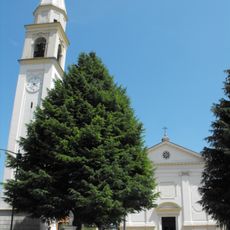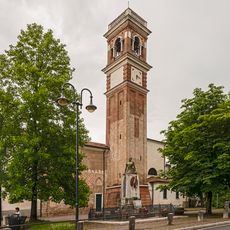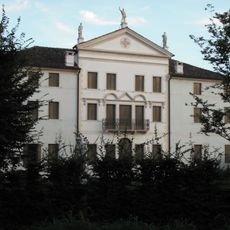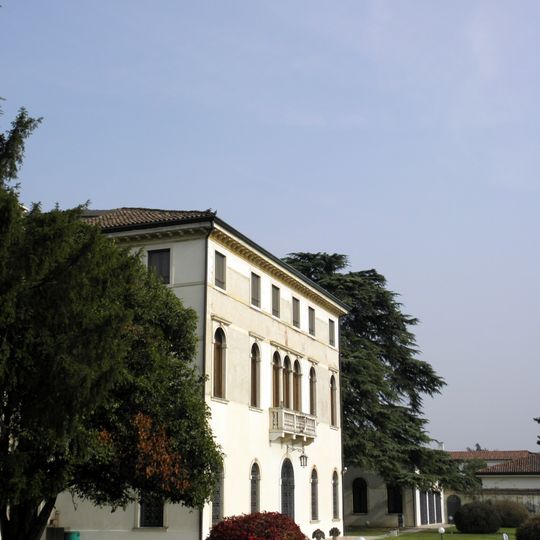
Villa Priuli Grimani Morosini, building in Martellago, Italy
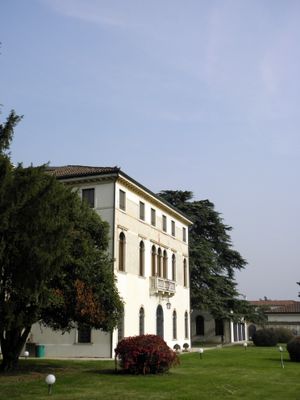
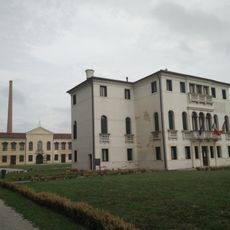
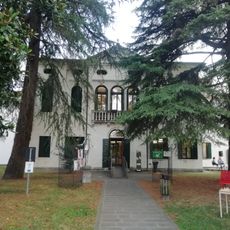
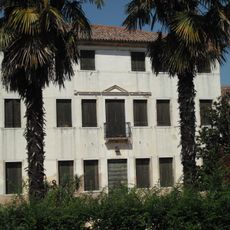
Villa Priuli Grimani Morosini, known as Ca' della Nave, is a 16th-century Venetian villa in Martellago with a square plan on three floors. Its facade carries frescoes by Giambattista Zelotti, and Istrian stone frames the windows and loggias. Two barchesse built perpendicular to the main block in the early 18th century are uncommon in Venetian villas: the west wing, frescoed by Francesco Fontebasso, served as guest quarters, while the east wing, painted by Francesco Zugno, leads to a tower-like palazzetto with a portico.
The Priuli family, who gave three doges to Venice, built the villa between 1566 and 1575. After 1620 they sold it to the Grimani branch of the Servi di Santo Stefano, who renovated it in the early 18th century and added two perpendicular barchesse. The garden was completed in 1706, and the complex was listed as a protected Venetian villa in 1954.
The name Ca' della Nave may derive from the Venetian dialect for a large ship, though the source does not explain it. The palazzetto tower served as a meeting point where coffee was offered to guests on the first floor. In 1760 Carlo Goldoni dedicated his comedy L'amante di sé medesimo to Antonio Grimani during a stay at the villa.
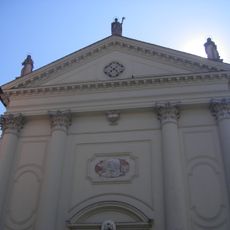
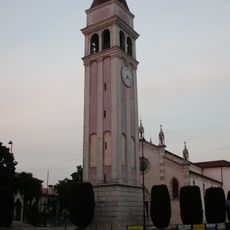
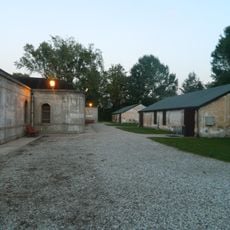
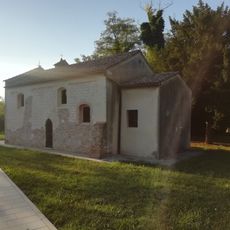
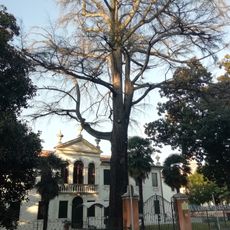
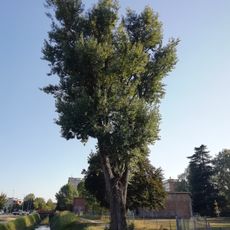
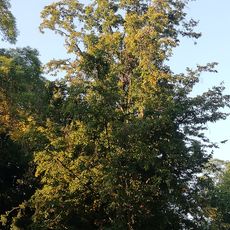
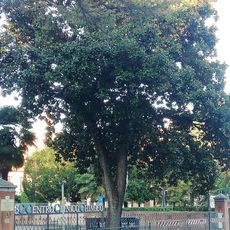
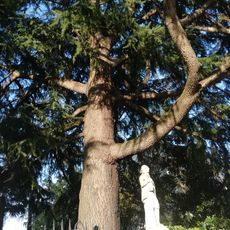
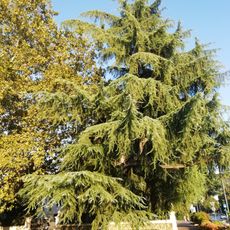
The complex stands in Martellago, in the province of Venice, with the main house, two barchesse, the palazzetto tower, the colombaia and the oratory grouped around a small quadrangular piazzetta. The west barchessa held guest rooms, while the east one leads to the palazzetto, where coffee was served on the first floor. The garden was completed in 1706; look for the mid-19th-century farnia, a pedunculate oak 27 m tall with a 23.5 m crown and a trunk 412 cm across.
The east barchessa ends in a tower-like palazzetto with a portico, where guests were once served coffee on the first floor; it connects to late-16th-century cellars. At the opposite end stands a three-story colombaia dovecote tower linked to the granary. In the park, a pedunculate oak (Quercus robur) from the mid-19th century measures 27 m high, with a 23.5 m crown and a trunk 412 cm across.
The community of curious travelers
AroundUs brings together thousands of curated places, local tips, and hidden gems, enriched daily by 94,351 contributors worldwide.