Villa delle Sacca, Historic building in Prato, Italy.
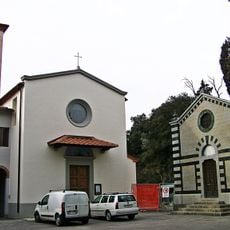
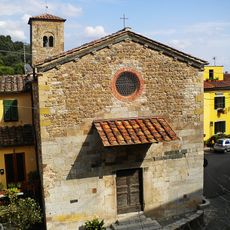
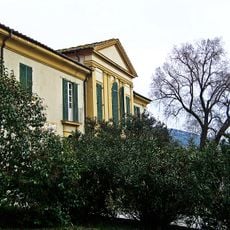
Villa delle Sacca is an ex-monastery complex on Spazzavento hill in Prato, made up of a transverse wing that formed the original convent, with remains of alberese stone structures and traces of medieval openings, plus the former church with an attached chapel. It was partly restored in the 1970s and is now in a state of complete decay.
The monastery of Santa Maria a Gamberondoli was probably founded in 1276; its nuns, called "le insaccate", lived there until 1390, when they moved to Porta San Giovanni in Prato. In 1406 the Olivetan monks bought the monastery for 410 gold florins from the women of Santa Margherita delle Sacca and restored it until 1411. The church choir was built in 1429, and in 1775 Grand Duke Pietro Leopoldo gave the abbey's estates to the Convitto Cicognini.
The villa once held a notable polyptych painted by Andrea di Giusto, reflecting its role as a repository of regional art and religious devotion. This connection to Florentine artistic traditions made it a place of cultural importance in the area.
The complex stands in complete disrepair on the Spazzavento hill above Prato, with no visitor facilities or marked route; only part was restored in the 1970s. Access is on foot along the hill road, so check locally before setting out and treat the buildings as unsafe to enter.
The Olivetan monks left a codex of contracts recording purchases and daily life; in 1910 Prato traded it to the Convitto Cicognini for a panel of Saint Anthony then attributed to Filippo Lippi. In 1908, work in the refectory uncovered a 15th-century Crucifixion fresco and a marble sundial carved by maestro Nencio da Firenze in 1409.
The community of curious travelers
AroundUs brings together thousands of curated places, local tips, and hidden gems, enriched daily by 93,585 contributors worldwide.