Museo Leone, History and art museum in Vercelli, Italy.
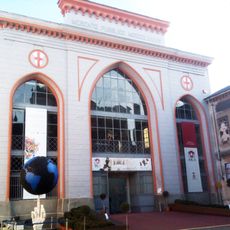
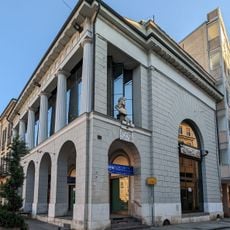
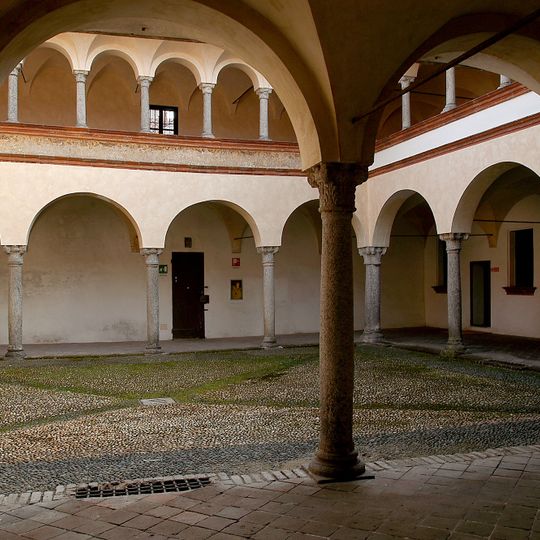
Museo Leone is housed in the 16th-century Casa Alciati and the Baroque Palazzo Langosco, joined by a connecting wing designed by Augusto Cavallari Murat in 1939, with a corner loggia linking the south and west sides. Paolo Verzone's restoration of Casa Alciati between 1930 and 1934 uncovered a fresco cycle decorating nine rooms. The collection ranges from prehistoric weapons and Egyptian tomb goods to Etruscan vases, medieval mosaics, porcelain, silver and modern paintings.
The museum was founded in 1910 to display the extensive collection of notary Camillo Leone, who gathered artifacts throughout his lifetime. Leone died in 1907 and left his collection with the intention of preserving it for the city.
The museum is named after notary Camillo Leone (1830–1907), who left his collections to Vercelli's Istituto di Belle Arti in 1907. The Roman room holds the Celtic-Latin stele of Vercelli, which opened the 1991 exhibition on the Celts at Palazzo Grassi in Venice. The displays mix prehistoric weapons, Egyptian tomb goods, Etruscan vases, medieval mosaics, porcelain, silver and modern paintings.
The museum occupies three connected buildings: the 16th-century Casa Alciati, the Baroque Palazzo Langosco and the 1939 linking wing by Augusto Cavallari Murat. A corner loggia joins the southern and western sides so the visit runs as one continuous route through the rooms.
The Roman room holds the Celto-Latin stele of Vercelli, which opened the 1991 exhibition on the Celts at Palazzo Grassi in Venice. The stone carries a bilingual inscription, Latin and ancient Gallic, and is the piece visitors most often overlook.
The community of curious travelers
AroundUs brings together thousands of curated places, local tips, and hidden gems, enriched daily by 93,068 contributors worldwide.