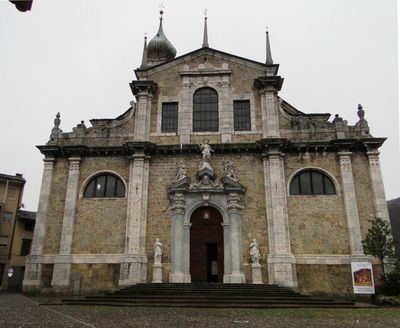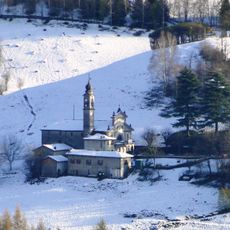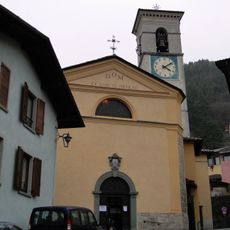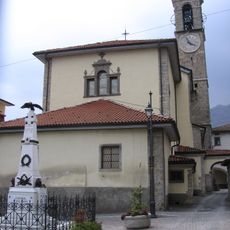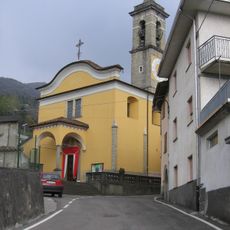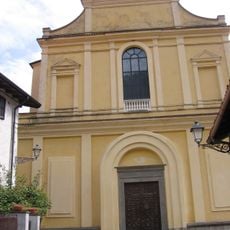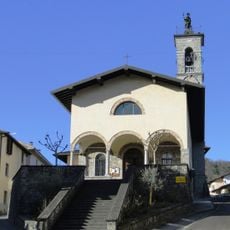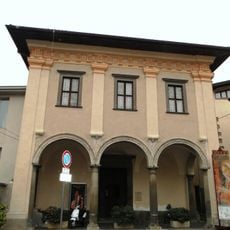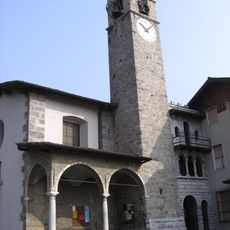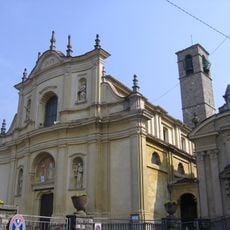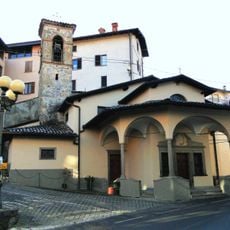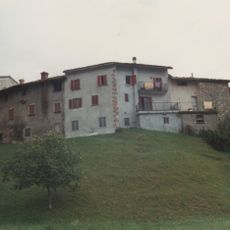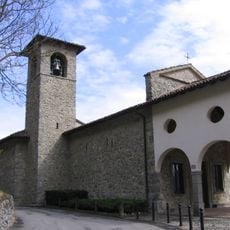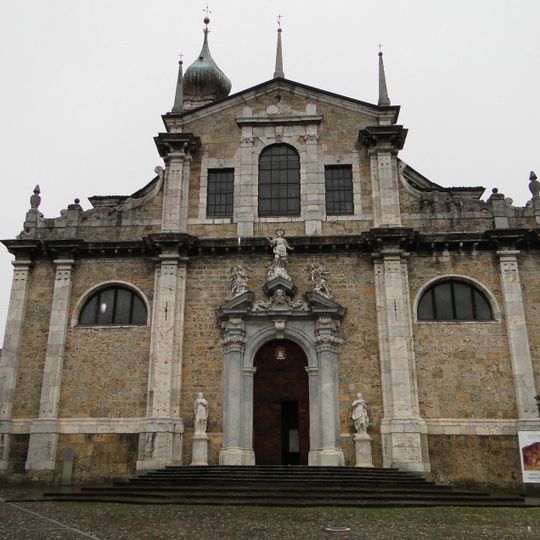
Santa Maria Assunta, Minor basilica and Italian national heritage in Gandino, Italy.
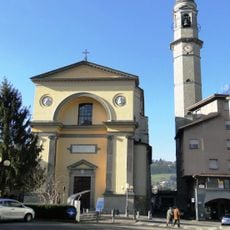
Santa Maria Assunta is a three-nave basilica on Piazza Emancipazione in Gandino, with a facade of local stone divided by pilasters. The Venetian-style portal by Domenico Rossi and Antonio Cavalleri carries zoomorphic statues in Rovinj stone by Paolo Callolo and Paolo Groppelli. The flat octagonal dome is frescoed by Giovanni Battista Lambranzi with Christ and Saints Peter, James the Elder and Bartholomew at the four cardinal points.
A church existed here by 1180, when the bishop of Bergamo Guala mentioned "Clerici Ecclesiae Sanctae Mariae di loco Gandino". The present building was begun in 1421, consecrated in 1430, and enlarged with a second nave in 1469. A third nave and lengthening followed from 1623 under Paolo Micheli; the dome by Giovan Maria Bettera was finished in 1640, and Bishop Carlo Nembrini consecrated the basilica in 1654. Pius X made it a minor basilica in 1911.
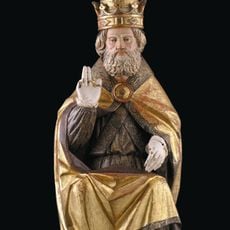
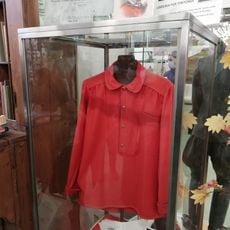
The church was consecrated on 13 September 1654 by Carlo Nembrini, bishop of Parma and a native of Gandino. Its museum, opened in 1929 and renovated in 1963, holds sacred vestments, tapestries by the Belgian artist Frans Guebels and paintings by Antonio Balestra and Sebastiano Ricci, plus a collection of about 280 nativity scenes and a section on Gandino's textile trade.
The building benefits from good natural light through windows and openings that make it comfortable to walk through. Visitors can move through at their own pace since the spaces remain accessible during normal hours.
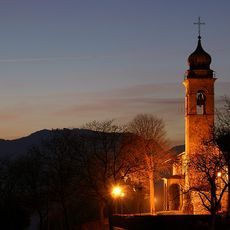
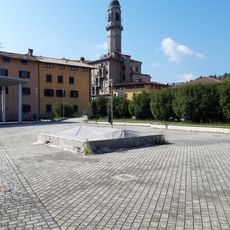
The bell tower stands 74 metres high, the tallest in the Serio valley, and its 13-metre copper helm was made by the Bolzano artist Francesco Shgraffer with the Trentino craftsman Paolo Sterzl. Its ten bells were cast between 1706 and 1822.
The community of curious travelers
AroundUs brings together thousands of curated places, local tips, and hidden gems, enriched daily by 94,129 contributors worldwide.