Ripari Villabruna, Archaeological site in Sovramonte, Italy.
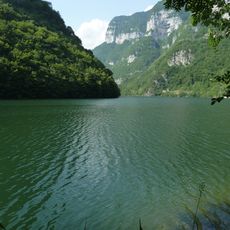
Ripari Villabruna is a rock shelter in the Cismon valley near Sovramonte, at about 500 m above sea level. Excavations revealed occupation layers from the late Epigravettian, around 14,000 years ago. In 1988 a shallow pit grave, 30–40 cm deep, was found at the base of the deposits, holding a well-preserved adult male skeleton with six grave goods placed to its left.
Debris removal in the Cismon valley in the late 1980s exposed the rock shelters, and excavations showed short, repeated occupations in a late Epigravettian context from about 14,000 years ago into the mid-Holocene. In 1988 a grave was found at the base of the archaeological layers; AMS dating of the skeleton gave 14,160 to 13,820 years before present.
The burial site reveals carefully positioned grave goods made from stone, bone, and pigment, suggesting ritualized funeral practices. These objects show how early people honored their dead and expressed values through material offerings.
The site is not accessible to visitors without special permission, as it remains an active archaeological research location. Anyone interested in visiting should contact local authorities or archaeological institutions in advance to inquire about possible access arrangements.
The site holds remains of an individual known as Villabruna 1, whose genetic markers belong to the oldest documented examples of a specific Y-DNA lineage. This genetic link connects the location to the deepest human prehistoric ancestry.
The community of curious travelers
AroundUs brings together thousands of curated places, local tips, and hidden gems, enriched daily by 94,669 contributors worldwide.