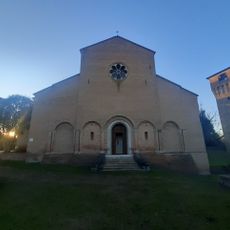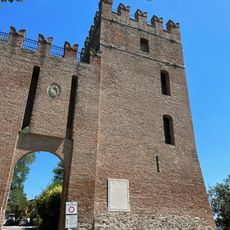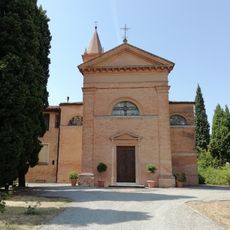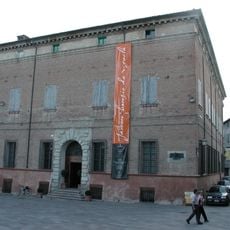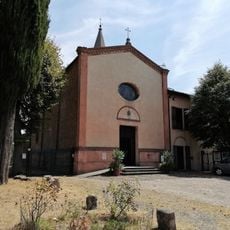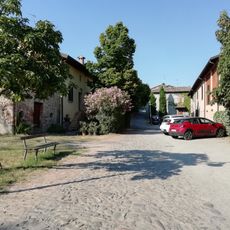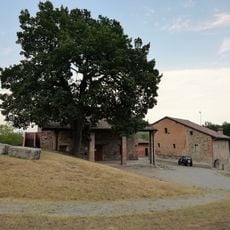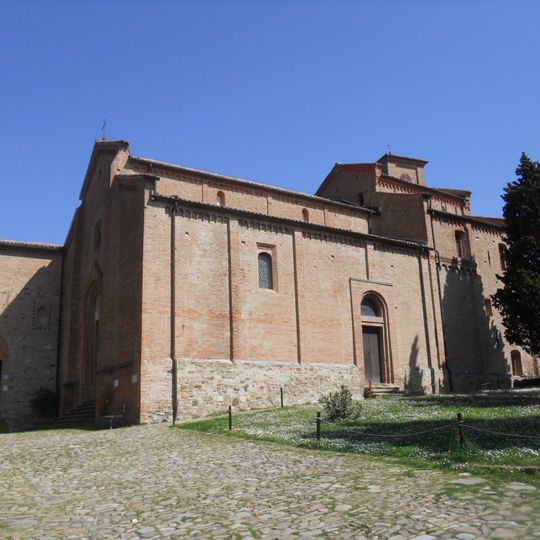
Abbazia di Santa Maria Assunta, Romanesque abbey in Valsamoggia, Italy.
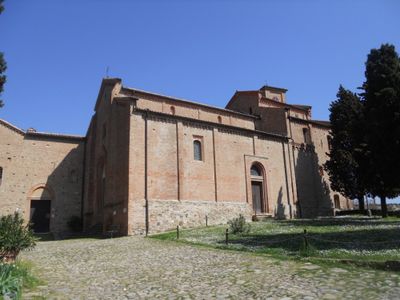
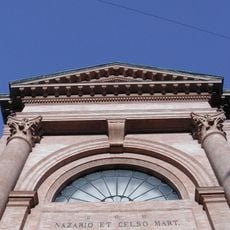
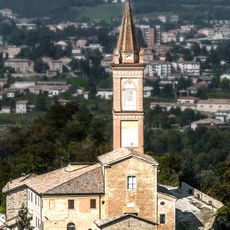
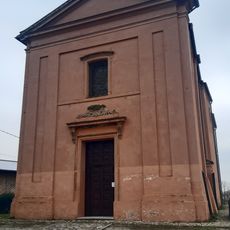
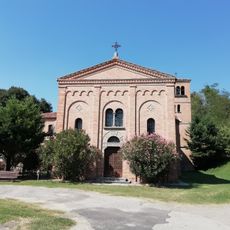
The Abbazia di Santa Maria Assunta is a Romanesque abbey in Monteveglio Alto, a hilltop village in Valsamoggia, built entirely in red Roman brick. Its interior follows a three-aisled basilica plan, with rows of columns dividing the nave from the side aisles and groin vaults covering the bays above.
A church and monastery probably existed here before the 9th century, as parts of the crypt and apse show. The present brick Romanesque buildings were mainly built between the 11th and 12th centuries, likely expanded in the 11th century under Matilda of Canossa and assigned to the Canons Regular of San Frediano di Lucca. In 1455 the Lateran Canons replaced them; the monastery was suppressed in 1796 under Napoleon and now houses Franciscan friars.
The abbey's name, Santa Maria Assunta, refers to the Assumption of Mary. Inside, the right aisle holds a Lombard-era holy water stoup, and the main altar rests on five columns of red Verona marble. A walnut wooden structure flanks the presbytery to house the choir, and a 15th-century wooden crucifix hangs above the main altar.
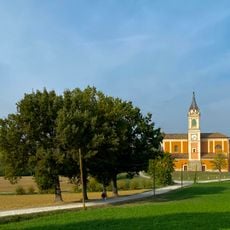
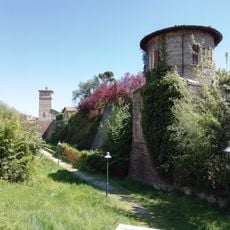
The abbey sits at the top of the old village of Monteveglio Alto and is reached on foot by a path that climbs steadily from the lower part of the town. Morning light falls directly on the brick facade from the east, making that time of day a good moment to look at the exterior details before going inside.
The abbey is one of a small group of religious buildings in Emilia-Romagna that were directly tied to Matilda of Canossa, one of the most powerful rulers in medieval Italy. This connection made Monteveglio Alto a strategic point in a network of fortified hilltop sites that linked religious authority with territorial control.
The community of curious travelers
AroundUs brings together thousands of curated places, local tips, and hidden gems, enriched daily by 95,041 contributors worldwide.